


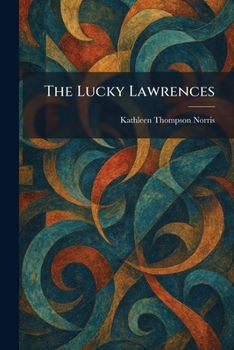
The Lucky Lawrences

Select Format
Select Condition 
Book Overview
"The Lucky Lawrences" is a heartwarming and poignant exploration of family loyalty, resilience, and the search for happiness in early 20th-century America. Written by the celebrated storyteller Kathleen Thompson Norris, this novel delves into the lives of the Lawrence family, capturing the intricate dynamics of a household navigating the highs and lows of fortune and love.
As the Lawrences face the challenges of maintaining their family bonds, the narrative highlights the strength of the human spirit and the enduring power of domestic life. Norris's signature style-blending sentiment with a keen observation of social manners-shines through as she depicts characters who are as relatable as they are endearing. From the bustling energy of a large family to the quiet moments of romantic longing, the story paints a vivid portrait of a bygone era.
This work stands as a classic example of domestic fiction, offering readers a window into the values and struggles of a generation. "The Lucky Lawrences" remains a testament to Norris's ability to craft engaging, character-driven stories that celebrate the importance of home and heart. It is a must-read for fans of classic American literature and those who appreciate stories about the enduring strength of the family unit.
This work has been selected by scholars as being culturally important, and is part of the knowledge base of civilization as we know it. This work was reproduced from the original artifact, and remains as true to the original work as possible. Therefore, you may see the original copyright references, library stamps (as most of these works have been housed in our most important libraries around the world), and other notations in the work.
This work is in the public domain in the United States of America, and possibly other nations. Within the United States, you may freely copy and distribute this work, as no entity (individual or corporate) has a copyright on the body of the work.
As a reproduction of a historical artifact, this work may contain missing or blurred pages, poor pictures, errant marks, etc. Scholars believe, and we concur, that this work is important enough to be preserved, reproduced, and made generally available to the public. We appreciate your support of the preservation process, and thank you for being an important part of keeping this knowledge alive and relevant.
Customer Reviews
ThriftBooks ® and the ThriftBooks ® logo are registered trademarks of Thrift Books Global, LLC
