
Skip to content
Scan a barcode
Scan
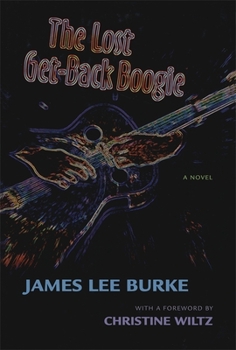
Hardcover The Lost Get-Back Boogie Book

ISBN: 080713032X

ISBN13: 9780807130322

The Lost Get-Back Boogie

Select Format

Select Condition ThriftBooks Help Icon

Recommended

Format: Hardcover

Condition: Very Good

$10.39
Save $19.56!
List Price $29.95
Almost Gone, Only 1 Left!
Save to List

Book Overview

Before The Lost Get-Back Boogie appeared to wide acclaim in 1986, James Lee Burke had been out of print in cloth for thirteen years and his fifth novel had received a record 111 rejection letters. LSU Press put me back in the game and turned my career around, Burke says. The novels and stories Burke had written during those years of rejection eventually became the stuff of the Dave Robicheaux series, which has earned him two Edgar Awards.Reviews of The Lost Get-Back Boogie now seem prescient. This is the book that Burke was born to write--and you're grateful he did, wrote syndicated reviewer Nancy Pate. It's the sort of novel that could win Burke a wider readership, said the Wichita Eagle-Beacon. And from the St. Louis Post-Dispatch, The Lost Get-Back Boogie was my introduction to Burke, and it is a cherished one. Burke demonstrates a rare ability to write an extraordinarily propulsive tale that borders on genre fiction without ever being less than literature.
The novel's title is also the name of the song that Iry Paret--a honky-tonk musician, Korean vet, and ex-con--wants to write to hold his memories of a more uncomplicated time, before the war, before prison. The book opens the day thirty-year-old Iry leaves Louisiana's Angola state penitentiary, after serving two years for manslaughter, and follows him to Montana, where he hopes to stay cool and out of trouble by working hard on a ranch owned by the father of his prison pal, Buddy Riordan. Iry finds the fresh start he seeks, joins a weekend band, and even falls in love. But the Riordan family's problems deal Iry a new sort of trouble with some ultimately tragic consequences.
The Lost Get-Back Boogie is a novel about loyalty and friendship, betrayal and loss. It is about essentially good people and their attempts to define the value of their lives and to find their place in a changing, complicated world. And it is the work of James Lee Burke at the top of his form.

Customer Reviews

5 ratings

A wonderful book

This is a wonderful book-perhaps the best I've read in a number of years. It is powerful and tragic, yet humorous at times. Iry is likeable, in spite of his history and the fact that he has made a cuckold out of Buddy. Buddy is bent on self-destruction, and Iry is concerned with self-preservation. The conflict between Beth and Mr. Riordan is never clear to me, but that is the only weakness I found in the book. This book is haunting and exhausting. The ending is somwhat hopeful, in spite of past tragedies. I strongly recommend this book.

should have won the Pulitzer it was nominated for

James Lee Burke's prose and narrative drives this tale of darkly depressing proportions along with steam train power. The characterisation exudes realism and recalls images of John Steinbeck. It's not Dave Robicheux but Lee Burke should be praised for bridging the gap between popular fiction and highest literature. Nominated for a Pulitzer, this book should definitely be read by any fan of Lee Burkes. It reassures that true excellence from an author can arise from the truest of tales.

My first Burke story, and a story it was!!

This was the first time that I had ever read a James Burke book, but it was certainly not my last. WOW!! For a book that I didn't think that I would get into, I really enjoyed it. I have since read all of his other books. Hope you enjoy it as well!!

Brave the discomfort and read for the imagery.

Booze is the prime demon for Iry Paret, dark and heavy hero of the demon-ridden novel, The Lost Get-Back Boogie. When Iry is paroled and three miles away from Angola prison, the foam is boiling over the lip of his first icy Jax; from then on, empty cans and bottle rattle in the cyclonic contests with the lesser demons; the sheriff, environment-stinking pulp mills, Vietnam memories, nightmares of drunken rage and helplessness.Buddy, Iry's friend from Angola, calls him Zeno. Zeno was the Greek founder of Stoicism, the school of impassivity, indifference to pleasure or pain. Buddy, the mean-drunk tilter at alcohol-induced windmills, enlists his friend the stoic in his battle against his own - and his family's - demons. Even the trucks and cars in their life are beset by the devils of redneck vengeance and drunken driving on mountain roads.It is painful to accompany Iry and Buddy as they drink, and weather jail, brawls, vicious beatings, cruel attacks on Buddy's father's beloved horses and wild birds. Burke's descriptive powers evoke sympathetic response as our eyes blear and our limbs numb and our nostrils fill with the stink of pervasive whiskey and beer, and we wish to God no one ever hurt like this.With the same power of words, Burke sets us first in Louisiana and then in Montana. We see the Mississippi River and prisoners clearing cane fields of tree roots; we feel the sun and smell the damp from the bayou. Montana is given to us gloriously; river, mountain, sky, clean crisp air, the dust of unpaved roads, taste of trout just taken from icy streams, snow crystals in a woman's hair. Burke is an extraordinary visual writer - what he shows you, you see. The juxtaposition of this enormous grandeur with the sad and violent men who are imprisoned in murky impulses and urges is somehow not jarring. Iry's wanderings through various "dirty little corners of the universe" can barely be called a quest. He avoids reflection; else he may have to admit other's evaluation; that "I had a little screw in the back of my head turned a few degrees off center." Alcohol can do that to you, but Iry doesn't realize it. Burke's well-known character Dave Robicheaux is what Iry could become if he stumbled into sobriety. Robicheaux still has his lesser demons, but he's been given a daily reprieve from the clutches of the big one.We like Iry and Buddy; even their enemies are not without our sympathy. The images Burke draw remain long after the book is closed and are a compelling reason to brave the discomfort of reading through to the end. Burke is in the forefront of the genre of recovering alcoholic detective. The Lost Get-Back Boogie, certainly outside the genre and not a mystery novel at all, will intrigue fans of Dave Robicheaux and perhaps adds depth to our understanding of him.

An outstanding early novel

Having found The Lost Get-Back Boogie in paperback recently, I rushed home and settled down, expecting a good Dave Robicheaux read. Only then did I see that this novel was pre-Robicheaux. My disappointment, however, didn't last beyond the first sentence. That's how long it took Burke to assure me that already, in this early novel, he was master of the wonderful atmospheric style that I love, a style that is as close to poetry as prose can get. Can anyone else make poetry out of a description of a Louisiana chain gang? ("The captain was silhouetted on horseback like a piece of burt iron against the sun.") And, can anyone else draw his readers so instantly into empathy with his flawed hero -- whatever name he chooses for that particular hero? In Iry Paret we have Burke's hallmark character: The strong, silent type, tough as nails and sharp as razor blades, who is yet a thinking, sensitive, deeply caring man; a young Louisiana blues singer, veteran of the Korean war, who wants nothing more than to be left in peace to play his guitar, sing his blues -- and finish the song he has been trying to write for years! Though he came home from the war unable to hunt and kill animals, he has done time in Angola for killing a man in a barroom brawl. It seemed to have been a case of self-defense but Iry, with the sense of guilt he wears like a mantle around his shoulders, is convinced he deserved the sentence. As Beth Riordan, the woman he comes to love, says to him, "You are a strange mixture of men." Yes. But a totally believable mixture. And totally sympathetic. So when, before the first chapter ends, Iry with his new parole walks away from Angola, we find we are walking with him, in his shoes, inside his skin. By giving us a close-up look at the prison, showing us where Iry's coming from, Burke evokes in us a greater desire to see him stay out of trouble. As he walks up that dusty road, refusing a ride in the prison truck because he "has to air it out," we know tha! t just one misstep -- and Iry will make plenty of them -- could hurl him right back where he came from. And we are afraid from him. Iry reaches his bayou home to find his father dying of cancer, both his brother and sister more foe than friend, and all his old friends dispersed and lost to him, no longer making music. When his father dies two weeks later, he gets his parole transferred to Montanna where he joins his one last friend Buddy Riordan, whom he befriended in prison. Montanna looks like paradise to Iry, but there's trouble brewing. Rancher Frank Riordan, Buddy's father who sponsored Iry's parole transfer, is fighting the new factories that are polluting Montana. And the workers in those factories are fighting back. Though he tries to claim neutrality, Iry is pulled inexorably into that trouble until he is fighting not only for his freedom but for his very life. This heart-wrenching, heart-warming novel is ultimately a love story. For in the end it is love that must overcom
Copyright © 2026 Thriftbooks.com Terms of Use | Privacy Policy | Do Not Sell/Share My Personal Information | Cookie Policy | Cookie Preferences | Accessibility Statement
ThriftBooks ® and the ThriftBooks ® logo are registered trademarks of Thrift Books Global, LLC

GoDaddy Verified and Secured