


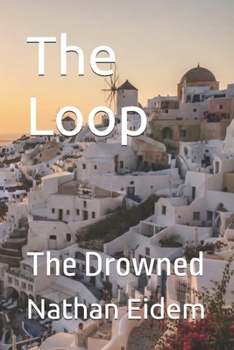
The Loop: The Drowned

Thirty-six centuries of saying sorry to an empty room.
Marine archaeologist Elena Koris has been diving the Santorini caldera for three years, mapping Minoan artifacts on the seafloor. It's painstaking work-pottery fragments and pumice and the drowned remains of a civilization erased by the most powerful volcanic eruption in recorded history. Then she starts dreaming in a language no one has been able to read for 3,600 years.
Linear A. The undeciphered script of the Minoans. In Elena's dreams, the symbols cover the caldera walls, luminous and alive-and she can read them. They're not a language. They're a musical score. A notation system for a frequency rising from the caldera floor. A record of humanity's first contact with an alien intelligence.
A contact that ended in catastrophe. The Minoan eruption wasn't natural. Something beneath the island reached too far, too fast, and tore its own home apart. Thirty thousand people died. A civilization vanished. And the thing that caused it has been humming its apology into empty water ever since.
Now Elena is hearing the apology. And she's the first person in thirty-six centuries who can answer it.
Beneath the Aegean, in a chamber carved from volcanic rock, the complete archive of the Minoan priestesses waits-thousands of tablets, three hundred years of conversation between humanity and something vast, preserved by the entity that destroyed its only friends. Elena can translate them. The question is whether the world is ready for what they say.
For readers of Piranesi, The Deep, and anyone who has ever looked at an ancient ruin and wondered what it was trying to tell them.
The drowned don't stay drowned. Not when their story saves the living.
Customer Reviews
ThriftBooks ® and the ThriftBooks ® logo are registered trademarks of Thrift Books Global, LLC
