


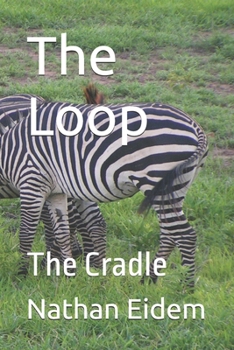
The Loop: The Cradle

Two million years of watching. Two million years of waiting. The oldest consciousness on Earth is ready to speak.
Amara is a healer. Her Maasai community has always known this-the woman who lays her hands on the sick and knows where the pain hides. What they don't know is that Amara's gift comes from the same place it has always come from: the sound beneath the Ngorongoro Crater. A hum she's heard since birth. A frequency carried in her blood through a chain of grandmothers stretching back further than any human genealogy should reach.
When a signal arrives from across the planet-a seed sent by another entity, younger and desperate to communicate-the thing beneath Ngorongoro stirs. Not from sleep. It has never slept. It has been watching humanity evolve from the very beginning: the first tools, the first fire, the first burial, the first art. Two million years of observation, compiled into the most comprehensive study of consciousness ever conducted.
Now the younger entities are waking up. Some are clumsy. Some are dangerous. And the elder beneath Ngorongoro-the library, the source, the patient grandmother of them all-is finally ready to share what it knows.
Amara is the librarian. The last listener in the longest line on Earth. And the manual she's about to help deliver could be the difference between first contact and last.
For readers of Nnedi Okofor, Cixin Liu, and Ursula K. Le Guin. For anyone who has ever believed that the oldest things in the world are also the wisest.
The elder listens. The children sing. The cradle rocks.
Customer Reviews
ThriftBooks ® and the ThriftBooks ® logo are registered trademarks of Thrift Books Global, LLC
