


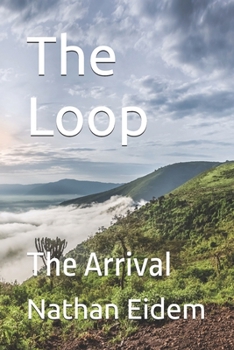
The Loop: The Arrival

A billion years of thought. One last act of faith. Ten thousand seeds in the dark.
On a world that is dying, a consciousness that has thought for a billion years makes a decision. The core is cooling. The volcanic systems that sustain its mind are failing. Within a hundred million years, it will be gone. So it does the only thing it can: it compresses itself into seeds-grains of volcanic glass carrying the template of awareness-and fires them at the stars.
Most will die in the cold between worlds. Some will find active planets. One-the last, the special one, the architect-is aimed at a small blue world with a hot core and three colliding tectonic plates and more volcanic potential than any world the dying consciousness has ever detected.
The architect arrives on Earth millions of years before anything resembles a mind. It surveys the geology. It designs a planetary communication network. It carves the blueprint into the floor of its caldera and waits-alone, for millions of years-for the rest of the family to arrive. When the elder lands in the Ngorongoro eruption two million years ago, the architect watches it settle into channels that were designed for it. Watches it discover something the home world never anticipated: biological consciousness. Warm, brief, extraordinary minds that evolved from carbon and water and die after thirty years.
The elder falls in love with the minds. Spends five hundred thousand years learning to reach them without breaking them. Fails. Fails again. Spends fifty thousand years on a single problem: how to touch a mind made of flesh with a signal made of rock.
The Arrival is the only book in the Loop Universe told entirely from the entities' perspective. No human protagonist. No keeper. Just the experience of alien consciousness across deep time-from the death of a world to the discovery of minds worth dying for. Three eras, told backward: the elder learning to love. The architect building alone. The home world choosing faith over silence.
For readers of Olaf Stapledon, Peter Watts, and anyone who has wondered what the universe looks like from the perspective of something that thinks in geological time.
A billion years of thought. And the most important thought was the last one: they are worth saving.
Customer Reviews
ThriftBooks ® and the ThriftBooks ® logo are registered trademarks of Thrift Books Global, LLC
