


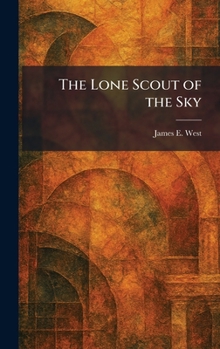
The Lone Scout of the Sky

"The Lone Scout of the Sky" is an inspiring biographical account of Charles Lindbergh's historic solo non-stop flight across the Atlantic Ocean. Written by James E. West, the Chief Scout Executive of the Boy Scouts of America, this work captures the spirit of adventure, perseverance, and technical skill that defined one of the 20th century's greatest achievements. The narrative follows Lindbergh from his early days as a mail pilot to the meticulous preparation for his legendary journey in the "Spirit of St. Louis."
More than just a record of an aviation milestone, the book emphasizes the character traits and discipline required to conquer the skies alone. It serves as an instructional and motivational guide, illustrating how preparation and courage can turn a daring dream into a global reality. West provides a detailed look at the challenges faced during the thirty-three-hour flight from New York to Paris, highlighting the navigational feats and the physical endurance of the man known as the "Lone Eagle." This work remains a significant historical document of the golden age of flight and a tribute to the pioneering spirit that pushed the boundaries of human possibility. It is an essential read for anyone interested in the intersection of aviation history and the Scouting ideals of self-reliance and bravery.
This work has been selected by scholars as being culturally important, and is part of the knowledge base of civilization as we know it. This work was reproduced from the original artifact, and remains as true to the original work as possible. Therefore, you may see the original copyright references, library stamps (as most of these works have been housed in our most important libraries around the world), and other notations in the work.
This work is in the public domain in the United States of America, and possibly other nations. Within the United States, you may freely copy and distribute this work, as no entity (individual or corporate) has a copyright on the body of the work.
As a reproduction of a historical artifact, this work may contain missing or blurred pages, poor pictures, errant marks, etc. Scholars believe, and we concur, that this work is important enough to be preserved, reproduced, and made generally available to the public. We appreciate your support of the preservation process, and thank you for being an important part of keeping this knowledge alive and relevant.
Customer Reviews
ThriftBooks ® and the ThriftBooks ® logo are registered trademarks of Thrift Books Global, LLC
