"I absolutely adored The Little White Horse."--J.K. Rowling, creator of the Harry Potter series Winner of the Carnegie Medal When orphaned young Maria Merryweather arrives at Moonacre Manor, she feels as if she's entered Paradise. Her new guardian, her uncle Sir Benjamin, is kind and funny; the Manor itself feels like home right away; and every person and animal she meets is like an old friend. But there is something incredibly sad beneath all of this beauty and comfort--a tragedy that happened years ago, shadowing Moonacre Manor and the town around it--and Maria is determined to learn about it, change it, and give her own life story a happy ending. But what can one solitary girl do?
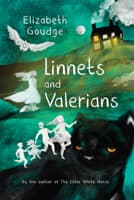
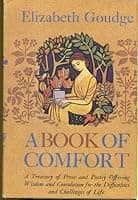
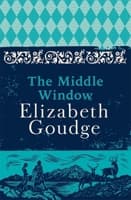
The book image shown was a first printing. The one I received was an eleventh printing. So take what you THINK you are buying with a grain of salt.
1
★★★★★
Beautiful
By P Tay, April 26, 2025
Verified Purchase
A lovely, imaginative story that walks a whimsical balance between reality and fairytale. I enjoyed so many, many lovely moments in this book.
1
★★★★★
Too great
By Lisa T, December 14, 2019
Verified Purchase
Loved this so much.
2
★★★★★
Moonlit fantasy
By Thriftbooks.com User, January 30, 2002
It's too bad that so few of Elizabeth Goudge's books are in print, though I am grateful that this one has been reprinted. I'd never read it before, and initially I was turned off by the unicorn illustration on the cover. But I'd heard lots of comments about how magical it was, and so I sat down to read.Newly orphaned Maria Merryweather is being sent from London to Moonacre Manor, the castle-like home of her uncle, Benjamin Merryweather. Initially Maria and her devoted governess Miss Heliotrope expect the place to be cold and uncomfortable -- but Maria is delighted to see an enchanted, silvery landscape, and the brief vision of a white horse running past. She fits quickly into the slightly strange, almost idyllic surroundings -- despite the fact that no woman has come to Moonacre Manor in twenty years. But Sir Benjamin seems very pleasant -- as does the huge, unusual dog Wrolf.Maria is enchanted both by the beautiful natural surroundings and the neighboring village of Silverydew. But she begins to sense that something is wrong: her uncle is unhappy about something and won't talk about the briefly-seen white horse. Her childhood invisible friend Robin returns to her -- and the inhabitants of Silverydew know him. Beautiful items are laid out in her tiny, luxurious room -- with the initials L.M. And strange dark figures are creeping through the woods near the sea. Maria soon finds out about a long-lasting story of magic, sadness, greed and darkness that has haunted her family for generations, and is determined to set it right.Goudge was evidently one of the few authors who can effectively blur the line between reality and dreaminess. Some sections of her prose are almost intoxicating; she never held back from describing surroundings and items lushly. The dreamy atmosphere of the book is established when Maria and Miss Heliotrope (and Wiggins the dog) arrive at Moonacre. Such beautifully written passages crop up, such as "moonlight and firelight mingled their silver and gold." We also are given examples of Ms. Goudge's evident love of both nature, the countryside, and religion (not preachily, simply a demonstration of the beauties she saw in it). She also mixes in a few other items: the hare being a "Fairy" creature, the legend behind the Merryweathers and the valley, the sinister Black Men in the forest, and the enchanting visualization of the "little white horse" being one of the white horses that crashes in on sea foam.Some aspects of this book are a little unusual by current politically correct standards: we get several negative references to "female curiosity", atheists may be offended by Ms. Goudge's evident dislike of atheism. And I literally have no idea what a "syllabub" is. However, since this takes place in a past era, there's no reason to fuss about it.Maria herself is a delightful heroine, with just enough quirks to make her realistic -- her mild preoccupation with clothes, for example. Miss Heliotrope is not the usual strict spinster gov
11
★★★★★
A Book For All Ages ... and For The Ages
By Thriftbooks.com User, June 13, 2000
I first read Elizabeth Goudge when I was 11 and I fell instantly in love with her writing. I read this book later than some of her others and I was enchanted immediately; and every time I re-read it, the enchantment returns. While I read, I am with Maria and Robin at Moonacre Manor, riding with them on their adventures, singing the Bell Song, confronting the Men of the Black Wood. I was thrilled to buy my own copy so I can read it whenever I want and not rely on the Public Library. And despite the fact that my copy has only the endpiece illustration of the Manor and its grounds, I can picture everyone and everywhere vividly. Goudge is a writer of true genius. Everything her characters do is completely consistent. Even the religion in the plot, and there is a lot, is not offensive or preachy. It fits perfectly into the whole ambience of the book. This is because Goudge was herself a deeply religious woman and the value she found in her faith is an integral part of all her novels. This book is worth 10 of most of the modern children's books. Moonacre Manor stands proudly with Narnia and Middle Earth.
7
★★★★★
The magic is real...
By Thriftbooks.com User, April 6, 2000
This was the favorite book of my childhood. I loved the old English setting, Maria's tower room, and all the details of her life - but what I liked most of all was the unique quality this story has of hovering somewhere between fairy tale and real life, between fantasy and reality. There is just enough magic to make you believe that, just maybe, it could be true, it could happen to you. At the heart of the story is the poignant, dream-like image of the little white horse- I think consciously put in as a symbol of all those vague, undefined, unspoken longings that are hidden deep inside ourselves. I wrote a college paper on this book in my twenties and could still see no flaws in it; only now in my fourties reading it to my daughter am I able to note that the writing is a bit clumsy and heavy handed at times. But I still can't stop hoping - believing - that someday, looking down a forest glade, I at last will see the glowing unicorn in the distance.
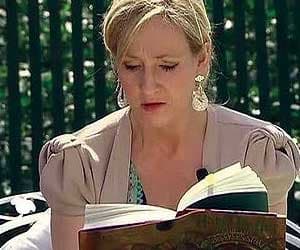
Long before she became the queen of Twitter or the beloved author of Harry Potter, J.K. Rowling was (and still is) a voracious reader...a habit she shares with the majority of the world's ultra-successful people. Keep reading for 7 books she loves—the author who inspired her fangirl moment might surprise you. (Hint: they have the same hair color.)