


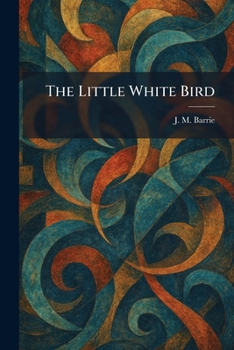
The Little White Bird

"The Little White Bird" is a whimsical and enchanting novel by J.M. Barrie that weaves together reality and fantasy in a series of vignettes set in Edwardian London. Narrated by a retired captain, the story follows his relationship with a young boy named David and their shared adventures through the mystical landscape of Kensington Gardens. This work is most notable for introducing the world to the legendary character of Peter Pan, who appears in several chapters as an infant who escaped his cradle to live among the fairies.
Blending humor, sentimentality, and a touch of melancholy, the narrative explores the fleeting nature of childhood and the bridges between the adult world and the realm of imagination. Barrie's prose captures the magic of everyday life, transforming a public park into a kingdom of wonder where birds are said to be the precursors of children and the night is filled with secret festivities. "The Little White Bird" remains a foundational text in literary history, offering a unique glimpse into the origins of one of the most enduring figures in the world of storytelling.
This work has been selected by scholars as being culturally important, and is part of the knowledge base of civilization as we know it. This work was reproduced from the original artifact, and remains as true to the original work as possible. Therefore, you may see the original copyright references, library stamps (as most of these works have been housed in our most important libraries around the world), and other notations in the work.
This work is in the public domain in the United States of America, and possibly other nations. Within the United States, you may freely copy and distribute this work, as no entity (individual or corporate) has a copyright on the body of the work.
As a reproduction of a historical artifact, this work may contain missing or blurred pages, poor pictures, errant marks, etc. Scholars believe, and we concur, that this work is important enough to be preserved, reproduced, and made generally available to the public. We appreciate your support of the preservation process, and thank you for being an important part of keeping this knowledge alive and relevant.
Customer Reviews
ThriftBooks ® and the ThriftBooks ® logo are registered trademarks of Thrift Books Global, LLC
