


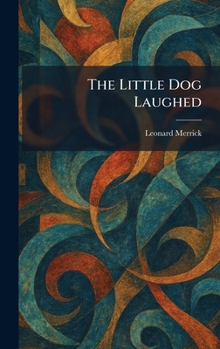
The Little Dog Laughed

"The Little Dog Laughed" is a sophisticated collection of short stories by the acclaimed English author Leonard Merrick. Known for his wit, irony, and deep understanding of the human heart, Merrick presents a series of narratives that capture the essence of life's unpredictable twists and turns. The work is characterized by its elegant style and its focus on the lives of artists, writers, and actors-subjects Merrick handled with unparalleled intimacy and insight.
The stories within "The Little Dog Laughed" range from the humorously satirical to the poignantly reflective. Merrick's keen eye for social detail and his ability to craft relatable, often flawed characters make these tales as engaging today as they were when they first appeared. Whether exploring the aspirations of a struggling playwright or the domestic ironies of the middle class, the collection maintains a perfect balance of lightness and depth, often concluding with the clever reversals for which Merrick was famous.
As a notable example of early 20th-century literary craftsmanship, "The Little Dog Laughed" highlights Merrick's reputation as a master of the short story form. This collection invites readers to enjoy a world of clever dialogue, subtle emotion, and timeless observations on the nature of success, failure, and the laughter that accompanies them both.
This work has been selected by scholars as being culturally important, and is part of the knowledge base of civilization as we know it. This work was reproduced from the original artifact, and remains as true to the original work as possible. Therefore, you may see the original copyright references, library stamps (as most of these works have been housed in our most important libraries around the world), and other notations in the work.
This work is in the public domain in the United States of America, and possibly other nations. Within the United States, you may freely copy and distribute this work, as no entity (individual or corporate) has a copyright on the body of the work.
As a reproduction of a historical artifact, this work may contain missing or blurred pages, poor pictures, errant marks, etc. Scholars believe, and we concur, that this work is important enough to be preserved, reproduced, and made generally available to the public. We appreciate your support of the preservation process, and thank you for being an important part of keeping this knowledge alive and relevant.
Customer Reviews
ThriftBooks ® and the ThriftBooks ® logo are registered trademarks of Thrift Books Global, LLC
