


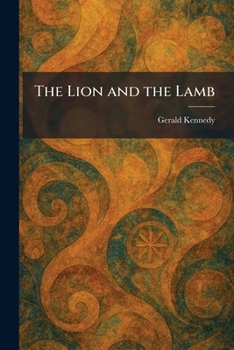
The Lion and the Lamb

Select Format
Select Condition 
Book Overview
"The Lion and the Lamb" is a thoughtful exploration of the theological paradoxes that define the Christian experience. In this work, Gerald Kennedy examines the powerful dualities inherent in faith, contrasting the majesty of the lion with the meekness of the lamb to illustrate the multifaceted nature of Christ and the believer's journey. Through a series of reflective chapters, the author navigates the tensions between justice and mercy, power and sacrifice, and the temporal and the eternal.
Kennedy's prose provides a bridge between complex theological concepts and the practical realities of spiritual life. By focusing on the central mysteries of the Gospel, "The Lion and the Lamb" invites readers to reconsider the depth of their convictions and the transformative impact of Christian teaching on the individual soul. The book serves as an insightful guide for those looking to understand the nuanced balance required to live a life of faith. It remains a valuable resource for anyone interested in Christian philosophy, homiletics, or the enduring relevance of biblical symbolism in religious thought.
This work has been selected by scholars as being culturally important, and is part of the knowledge base of civilization as we know it. This work was reproduced from the original artifact, and remains as true to the original work as possible. Therefore, you may see the original copyright references, library stamps (as most of these works have been housed in our most important libraries around the world), and other notations in the work.
This work is in the public domain in the United States of America, and possibly other nations. Within the United States, you may freely copy and distribute this work, as no entity (individual or corporate) has a copyright on the body of the work.
As a reproduction of a historical artifact, this work may contain missing or blurred pages, poor pictures, errant marks, etc. Scholars believe, and we concur, that this work is important enough to be preserved, reproduced, and made generally available to the public. We appreciate your support of the preservation process, and thank you for being an important part of keeping this knowledge alive and relevant.
Customer Reviews
ThriftBooks ® and the ThriftBooks ® logo are registered trademarks of Thrift Books Global, LLC
