


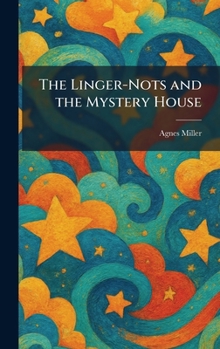
The Linger-Nots and the Mystery House

"The Linger-Nots and the Mystery House" is a classic of juvenile detective fiction that introduces readers to the Linger-Not Club-a group of spirited and resourceful girls who find adventure and intrigue in their everyday lives. In this volume by Agnes Miller, the girls' curiosity is piqued by the enigmatic reputation of a local residence shrouded in secrecy. As they investigate the strange occurrences surrounding the eponymous house, they must rely on their wit, teamwork, and bravery to uncover the truth hidden behind its walls.
Written during the golden age of girl-sleuth narratives, this story captures the sense of independence and camaraderie that defined the genre in the early 20th century. "The Linger-Nots and the Mystery House" combines elements of suspense and wholesome adventure, making it an engaging read for those interested in the history of children's literature or fans of nostalgic mysteries. Miller's storytelling emphasizes the importance of friendship and the thrill of discovery, ensuring that the exploits of the Linger-Nots remain a delightful example of vintage mystery fiction for modern audiences.
This work has been selected by scholars as being culturally important, and is part of the knowledge base of civilization as we know it. This work was reproduced from the original artifact, and remains as true to the original work as possible. Therefore, you may see the original copyright references, library stamps (as most of these works have been housed in our most important libraries around the world), and other notations in the work.
This work is in the public domain in the United States of America, and possibly other nations. Within the United States, you may freely copy and distribute this work, as no entity (individual or corporate) has a copyright on the body of the work.
As a reproduction of a historical artifact, this work may contain missing or blurred pages, poor pictures, errant marks, etc. Scholars believe, and we concur, that this work is important enough to be preserved, reproduced, and made generally available to the public. We appreciate your support of the preservation process, and thank you for being an important part of keeping this knowledge alive and relevant.
Customer Reviews
ThriftBooks ® and the ThriftBooks ® logo are registered trademarks of Thrift Books Global, LLC
