


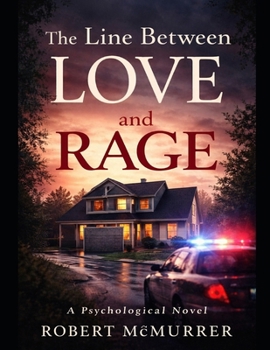
The Line Between Love and Rage

ed by routine, sacrifice, and quiet devotion, anchored by the belief that vigilance and control are the foundations of safety. But when subtle changes in his daughter's behavior begin to surface-late nights, guarded conversations, unexplained absences-his protective instincts awaken into something darker.
What begins as concern slowly transforms into obsession. As Michael's fear deepens, his ability to distinguish intuition from imagination erodes. The more he attempts to regain control, the further he drifts from the man he believes himself to be. When he confronts a perceived threat, a single irreversible decision shatters his carefully constructed world.
The Line Between Love and Rage is not a story of heroism or justification. It is a psychological examination of fear, moral ambiguity, and the devastating consequences of unchecked emotion. The novel explores how love-when driven by anxiety, control, and certainty-can cross a boundary from protection into destruction.
Through a slow-burning narrative, the book traces the collapse of a father's identity as he is forced to confront the reality of his actions and the systems that respond without regard for intent. The aftermath is portrayed with restraint and realism, focusing on accountability, loss, and the permanent weight of a single moment.
This novel will resonate with readers interested in psychological fiction, domestic tragedy, and character-driven narratives that challenge easy moral conclusions. It asks difficult questions about parental fear, authority, and the fragile line separating devotion from violence.
Customer Reviews
ThriftBooks® and the ThriftBooks® logo are registered trademarks of Thrift Books Global, LLC
