


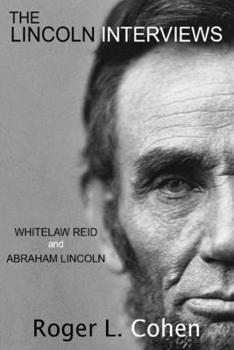
The Lincoln Interviews: Whitelaw Reid and Abraham Lincoln

At the end of the Civil War, journalist Whitelaw Reid conducts a series of candid interviews with Abraham Lincoln. In these conversations, Lincoln utilizes Reid as a medium to convey the complex narrative of his war administration, his constitutional struggle over the suspension of the writ of habeas corpus, and his rationale for taking a measured path to his Emancipation Proclamation. Unrestrained in his opinions, Lincoln discusses the turbulent rise and fall of George McClellan, his General-in-Chief, while affirming his steadfast support for Ulysses S. Grant, whom he viewed as the nation's savior. Lincoln confronts his most controversial presidential decisions head-on, unveiling an emotional side that he intentionally kept hidden from the public. In his final interview, he opens up about the death of his beloved son, Willie. With intense emotion, he explains how he chose not to allow this tragedy, nor the deaths of hundreds of thousands of Union and Confederate soldiers, to lead him down a path of retributive justice while, at the same time, striving to safeguard his emotional well-being amid the ongoing threats to his own life.
Inspired by the real-life dispatches of Civil War correspondent Whitelaw Reid, Roger Cohen creates a compelling narrative that intertwines Reid's observations, Lincoln's letters and speeches, and commentary from those in Lincoln's inner circle. This compelling work of historical fiction captures the unique challenges encountered by our 16th president during an unprecedented time in our nation's history.
Related Subjects
HistoryCustomer Reviews
ThriftBooks® and the ThriftBooks® logo are registered trademarks of Thrift Books Global, LLC
