


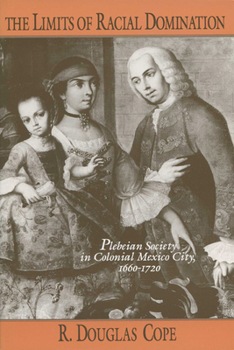
The Limits of Racial Domination: Plebeian Society in Colonial Mexico City, 1660-1720


Select Format
Select Condition 
Book Overview
In this distinguished contribution to Latin American colonial history, Douglas Cope draws upon a wide variety of sources--including Inquisition and court cases, notarial records and parish registers--to challenge the traditional view of castas (members of the caste system created by Spanish overlords) as rootless, alienated, and dominated by a desire to improve their racial status. On the contrary, the castas, Cope shows, were neither passive nor ruled by feelings of racial inferiority; indeed, they often modified or even rejected elite racial ideology. Castas also sought ways to manipulate their social "superiors" through astute use of the legal system. Cope shows that social control by the Spaniards rested less on institutions than on patron-client networks linking individual patricians and plebeians, which enabled the elite class to co-opt the more successful castas.
The book concludes with the most thorough account yet published of the Mexico City riot of 1692. This account illuminates both the shortcomings and strengths of the patron-client system. Spurred by a corn shortage and subsequent famine, a plebeian mob laid waste much of the central city. Cope demonstrates that the political situation was not substantially altered, however; the patronage system continued to control employment and plebeians were largely left to bargain and adapt, as before. A revealing look at the economic lives of the urban poor in the colonial era, The Limits of Racial Domination examines a period in which critical social changes were occurring. The book should interest historians and ethnohistorians alike.Customer Reviews
Thorough account of a troubling aspect of Mexican history
Well executed and much necessary study
ThriftBooks® and the ThriftBooks® logo are registered trademarks of Thrift Books Global, LLC
