


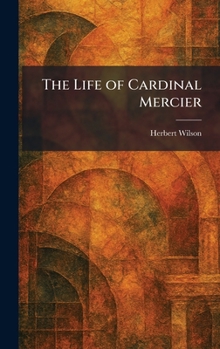
The Life of Cardinal Mercier

"The Life of Cardinal Mercier" provides an in-depth exploration of one of the most influential figures in early twentieth-century Catholicism. This biography chronicles the journey of D sir -Joseph Mercier from his early academic career to his elevation as the Archbishop of Mechelen and a Cardinal of the Holy Roman Church. Known for his profound intellect and his pivotal role in reviving Neo-Scholastic philosophy at the University of Louvain, Mercier's life took on international significance during the First World War.
As a symbol of Belgian resistance, the Cardinal stood firm against foreign occupation, offering moral leadership and a voice for the oppressed when his country needed it most. This work examines his theological contributions, his pastoral devotion, and his unwavering courage in the face of political turmoil. The narrative captures the essence of a man who was both a scholar and a patriot, providing readers with a comprehensive portrait of a leader whose legacy continues to resonate within the history of the Church and the Belgian nation. Herbert Wilson's account offers a compelling look at the intersection of faith, intellect, and civic duty during a time of global crisis.
This work has been selected by scholars as being culturally important, and is part of the knowledge base of civilization as we know it. This work was reproduced from the original artifact, and remains as true to the original work as possible. Therefore, you may see the original copyright references, library stamps (as most of these works have been housed in our most important libraries around the world), and other notations in the work.
This work is in the public domain in the United States of America, and possibly other nations. Within the United States, you may freely copy and distribute this work, as no entity (individual or corporate) has a copyright on the body of the work.
As a reproduction of a historical artifact, this work may contain missing or blurred pages, poor pictures, errant marks, etc. Scholars believe, and we concur, that this work is important enough to be preserved, reproduced, and made generally available to the public. We appreciate your support of the preservation process, and thank you for being an important part of keeping this knowledge alive and relevant.
Customer Reviews
ThriftBooks ® and the ThriftBooks ® logo are registered trademarks of Thrift Books Global, LLC
