


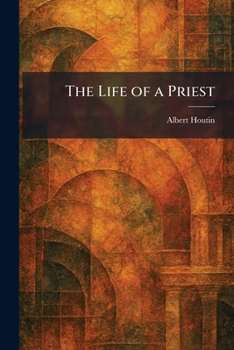
The Life of a Priest

Select Format
Select Condition 
Book Overview
"The Life of a Priest 1867-1912" offers a profound and introspective look into the spiritual and intellectual journey of Albert Houtin during a transformative period in ecclesiastical history. As a key figure in the Modernist movement within the Catholic Church, Houtin provides a candid account of his experiences from his early religious formation through his years of service and his eventual departure from the traditional clergy.
This memoir serves as a critical historical document, detailing the internal conflicts, theological debates, and institutional challenges that defined the turn of the 20th century. Through his personal narrative, Houtin explores the burgeoning tension between traditional faith and the rigors of historical criticism, shedding light on the broader cultural and intellectual shifts affecting European religious life. The work captures the essence of a man navigating a world where centuries of tradition met the scrutiny of the modern age, offering an essential perspective on the evolution of religious thought and the history of the Catholic Church in France. Readers interested in church history and the personal cost of intellectual integrity will find this work an invaluable and compelling resource.
This work has been selected by scholars as being culturally important, and is part of the knowledge base of civilization as we know it. This work was reproduced from the original artifact, and remains as true to the original work as possible. Therefore, you may see the original copyright references, library stamps (as most of these works have been housed in our most important libraries around the world), and other notations in the work.
This work is in the public domain in the United States of America, and possibly other nations. Within the United States, you may freely copy and distribute this work, as no entity (individual or corporate) has a copyright on the body of the work.
As a reproduction of a historical artifact, this work may contain missing or blurred pages, poor pictures, errant marks, etc. Scholars believe, and we concur, that this work is important enough to be preserved, reproduced, and made generally available to the public. We appreciate your support of the preservation process, and thank you for being an important part of keeping this knowledge alive and relevant.
Customer Reviews
ThriftBooks ® and the ThriftBooks ® logo are registered trademarks of Thrift Books Global, LLC
