


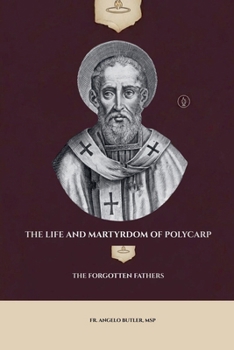
The Life and Martyrdom of Polycarp

The Life and Martyrdom of Polycarp: The Forgotten Fathers
From the pen of a distinguished Catholic historian comes the definitive account of one of Christianity's most compelling saints. Polycarp of Smyrna (69-155 AD) stands as the vital bridge between the Apostolic Age and the early Church-the man who learned directly from St. John the Evangelist and passed those teachings to generations that followed.
This meticulously researched volume reconstructs Polycarp's extraordinary life with historical precision and theological depth. Walk alongside this venerable bishop as he preserves authentic Christian teaching during Christianity's most formative decades. Witness his steadfast confrontation with heretics like Marcion. Stand with him as he faces the Roman proconsul and utters words that echo through centuries: "Eighty-six years have I served Christ, and He never did me any injury. How then can I blaspheme my King and Savior?"
Drawing from primary sources including the "Letter of the Smyrnaeans" (155 AD), the writings of St. Irenaeus of Lyon (180 AD), and Eusebius's Ecclesiastical History (324 AD), this authoritative work presents Polycarp not as a distant historical figure but as a spiritual father whose witness remains urgently relevant for today's Christians.
Through twenty carefully crafted chapters, readers will:
Understand how Polycarp preserved apostolic teaching during Christianity's crucial transitionExamine his pivotal meeting with Pope Anicetus (154 AD) and its significance for Church unityStudy the theological meaning of his martyrdom and its impact on Christian identityDiscover his enduring legacy in patristic literature, liturgical practice, and Christian artFor serious Catholics, scholars, clergy, and anyone seeking connection to Christianity's apostolic roots, this definitive biography brings to life the man who shows us what genuine faith looks like in the face of both cultural pressure and outright persecution.
As persecution of Christians increases worldwide and faith faces new challenges in Western societies, Polycarp's example has never been more timely-or more necessary.
Customer Reviews
ThriftBooks® and the ThriftBooks® logo are registered trademarks of Thrift Books Global, LLC
