


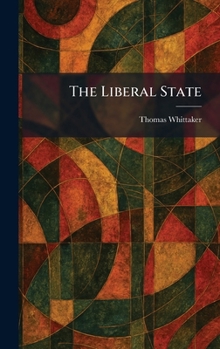
The Liberal State

"The Liberal State" by Thomas Whittaker is a profound exploration of the philosophical and political foundations of the modern liberal society. This work delves into the essential principles that define the relationship between the individual and the governing body, examining the historical evolution of liberal thought while emphasizing the importance of intellectual freedom, rational governance, and the ethical responsibilities of the state.
The text provides a comprehensive analysis of the concepts of liberty and justice, arguing for a state structure that prioritizes the well-being and development of its citizens. Whittaker offers a scholarly perspective on how liberal ideals can be sustained amidst social and political shifts, reflecting the intellectual climate of the early twentieth century. This book serves as an important contribution to political philosophy, appealing to readers interested in the intellectual history of liberalism, political theory, and the enduring questions regarding the organization of a free and just society. By revisiting the core tenets of the liberal tradition, Whittaker provides a timeless defense of the values that underpin democratic civilization.
This work has been selected by scholars as being culturally important, and is part of the knowledge base of civilization as we know it. This work was reproduced from the original artifact, and remains as true to the original work as possible. Therefore, you may see the original copyright references, library stamps (as most of these works have been housed in our most important libraries around the world), and other notations in the work.
This work is in the public domain in the United States of America, and possibly other nations. Within the United States, you may freely copy and distribute this work, as no entity (individual or corporate) has a copyright on the body of the work.
As a reproduction of a historical artifact, this work may contain missing or blurred pages, poor pictures, errant marks, etc. Scholars believe, and we concur, that this work is important enough to be preserved, reproduced, and made generally available to the public. We appreciate your support of the preservation process, and thank you for being an important part of keeping this knowledge alive and relevant.
Customer Reviews
ThriftBooks ® and the ThriftBooks ® logo are registered trademarks of Thrift Books Global, LLC
