


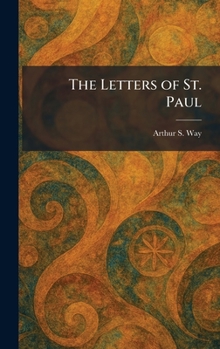
The Letters of St. Paul

"The Letters of St. Paul" presents a rhythmic and scholarly translation of the Pauline Epistles, crafted to convey the power and nuance of the original Greek text. Rather than treating these writings as distant theological fossils, this work presents them as vibrant, urgent correspondence addressed to the early Christian communities. Arthur S. Way's translation emphasizes the emotional intensity and intellectual rigor of Paul's mission, making the profound concepts of grace, faith, and salvation accessible to the modern reader.
The collection encompasses the major letters, including those to the Romans, Corinthians, and Galatians, providing a comprehensive view of the Apostle's doctrinal development and his personal struggles as a leader in the nascent church. By focusing on the literary quality of the text, "The Letters of St. Paul" allows the reader to experience the persuasive force and spiritual depth that defined the first century of Christian thought. This work remains an invaluable resource for students of biblical literature and anyone seeking a deeper understanding of the historical and theological foundations of the New Testament. It serves as a bridge between rigorous academic study and personal reflection on some of the most influential documents in human history.
This work has been selected by scholars as being culturally important, and is part of the knowledge base of civilization as we know it. This work was reproduced from the original artifact, and remains as true to the original work as possible. Therefore, you may see the original copyright references, library stamps (as most of these works have been housed in our most important libraries around the world), and other notations in the work.
This work is in the public domain in the United States of America, and possibly other nations. Within the United States, you may freely copy and distribute this work, as no entity (individual or corporate) has a copyright on the body of the work.
As a reproduction of a historical artifact, this work may contain missing or blurred pages, poor pictures, errant marks, etc. Scholars believe, and we concur, that this work is important enough to be preserved, reproduced, and made generally available to the public. We appreciate your support of the preservation process, and thank you for being an important part of keeping this knowledge alive and relevant.
Customer Reviews
ThriftBooks ® and the ThriftBooks ® logo are registered trademarks of Thrift Books Global, LLC
