


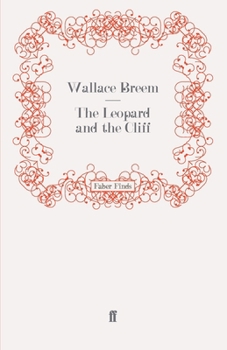
The Leopard and the Cliff


Select Format
Select Condition 
Book Overview
The classic military adventure: a gripping tale of honour, duty, and sacrifice during the Afghan war of 1919 in British India. 'A writer who never disappoints one. He has an extraordinary power of treating military disaster in depth and yet with pace, whether on the frontiers of Rome or British India, and of analysing the tensions of command. Gripping as an action story, deeply moving on the individual level, it involves one as an eye-witness from beginning to end.' Mary RenaultThis classic military adventure is a gripping insight into life on an exposed outpost of the Afghan frontier.Major Charles Sandeman is an unlikely hero: an intellectual soldier, repeatedly passed over for promotion in the British Indian Army. When war suddenly erupts between India and Afghanistan in 1919, Sandeman is caught, as the locals say, 'between the leopard and the cliff'. Facing an uprising of hostile border tribes and mutinies, he must rise to the challenge and lead the retreat of his soldiers in a bleak trek through unforgiving terrain.Brimming with action, suspense, and psychological power, The Leopard and the Cliff is a masterful military adventure which has never felt more prophetic, offering insights into colonialism and tribal divides that haunt the world today. 'Gripping ... Brings out movingly and with skill points of vital importance to an understanding of British India and the Frontier ... Highly dramatic.' Philip Mason
Format:Paperback
Language:English
ISBN:0571269966
ISBN13:9780571269969
Release Date:November 2011
Publisher:Faber & Faber, Limited
Length:286 Pages
Weight:0.81 lbs.
Dimensions:0.7" x 5.5" x 8.5"
Customer Reviews
2 ratings
Story Of One Man's Struggle. (Spoiler Warning).
Published by Thriftbooks.com User , 17 years ago
"The Leopard And The Cliff" by Wallace Breem. Subtitled: "A Novel Of The North West Frontier". St. Martin's Press, New York 1978. Wallace Breem, who died in 1990, once served in the Indian Army. When India and Pakistan were portioned in 1947, Breem had to return home to England, where he wrote a few books and worked in the "Inner Temple" in London. This employment led to the book, "A Sketch of the Inner Temple Library", about that law library. I believe that the book, "The Leopard And The Cliff", had some autobiographical aspects to it, particularly in the retrospective ruminations of the main character, "Seneman sahib" = Sandeman. This character, Sandeman, looks back over his life and his time in what was basically a backwater posting, when many of the officers have just returned from the great slaughter that was World War I. It is 1919 and the various sections of the different tribes, the Wazirs and the Mahsuds, are agitating to regurgitate the British army that is lodged in the throat of Waziristan, a section of what was then Afghanistan. Sandeman has just gotten married and he is concerned for the future of his soon-to-be born child. "Photographs: His company at Sandhurst, various regimental groups, polo, shooting and hockey teams ..." they all would have to be left behind as the troops retreat to safety. Class status, which means so much to the British, limited Sandeman's future in the provincial army, and as he ruminates, he is thrust into command of his troops who remain after desertion, treachery and "passive" mutiny. Most of the book is then devoted to the retreat of the troops through the mountainous and dry land of Waziristan, where his main concern is obtaining water for the men and the animals. One by one, the British officers are killed, despite the best efforts of Sandeman and his excellent marksmanship. Page by page, you expect the disastrous end of the retreat, but there is always too much of the book remaining. For example, in one place the entire force appears to be trapped and the mutinous soldiers and local tribesmen appear ready to surround them. THEN!, the nascent RAF appears, and the enemy forces are treated to rain of bombs and to strafing. Recall that this is supposed to be 1919. The retreat of Sandeman with his loyal troops, is quite similar to the retreat of the Marines in Korea, during the Chosin Campaign. See "The Marines Of Autumn" by James Brady, St. Martin's, 2001. In Brady's novel, the main character, Marine officer Thomas Verity, dies just as the Marines reach safety. In Breem's novel, the chief character, Sandeman, also dies just as his forces safety. One thing that I did not like about Breem's work was his almost constant insertion of Pashtu and Waziri-Pashtu words into the text. I do not think that "exotic" words added to the story. Four pages of glossary were at the back of the book (pages 283-286), but my enjoyment of the novel was interrupted every time I had to refer
Thorough, compelling - but not "feel good" reading
Published by Thriftbooks.com User , 21 years ago
The novel is based around real events. In the tribal areas of the NW Frontier Province policing is conducted by Regiments of the Frontier Corps such as the Gilgit Scouts and the Khyber Rifles composed of local men under seconded army officers. In 1919 war broke out between Britain and Afghanistan which severely destabilised the tribal areas. In the Waziristan area the Frontier Corps units became highly unreliable. The novel deals with the effects of this on one particular unit, its officers and other ranks - both tribal and British. The book gives a very thorough exposition of tribal culture, the Frontier Corps and its operations as well as the employment of the Vickers Medium Machine Gun. As the other reviewer said it is useful in throwing light on the complex motivations of the Moslem soldier when his loyalties are strained, the difficulties of cross cultural relations in a military context and the problems of commanding para-military units in remote under-developed areas. That aside, however, it is an extremely depressing book which makes "All Quiet on the Western Front" look quite jolly. This is why I have given it four stars. Expect to be educated, expect good, gripping writing - BUT do not expect to be uplifted. I would also stress that this represents an episode in the history of a Corps which has given good service to Britain and Pakistan for many years prior to 1919 and up to the present day. To place the book in context I would recommend reading "The Frontier Corps" by Charles Chevenix Trench
Copyright © 2026 Thriftbooks.com
Terms of Use | Privacy Policy | Do Not Sell/Share My Personal Information | Cookie Notice | Cookie Preferences | Accessibility Statement
ThriftBooks ® and the ThriftBooks ® logo are registered trademarks of Thrift Books Global, LLC
ThriftBooks ® and the ThriftBooks ® logo are registered trademarks of Thrift Books Global, LLC
