


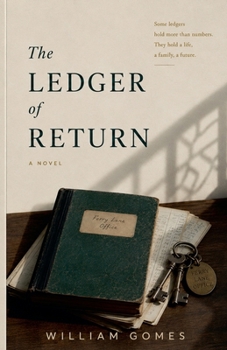
The Ledger of Return

A powerful contemporary literary novel about grief, inheritance, migration memory, family secrets and the records people leave behind.
Three days after her father's funeral, Yasmin Chowdhury is handed the keys to the shuttered Ferry Lane office where Abdul Matin Chowdhury spent a lifetime helping others with tickets, money transfers, passport forms, funeral paperwork and repatriation arrangements.
Yasmin expects dust, old receipts and the practical work of probate. Instead, she finds a closed room full of unfinished obligations: receipt books, client files, redevelopment letters, property documents, old photographs, burial records, names half-crossed out, and a ledger labelled Returns 1983 to 1987.
As Yasmin begins to sort what belongs to the estate, what belongs to the family and what may belong to other people, the past refuses to remain safely folded away. Her brother Jamal wants the office sold before debts and deadlines tighten. Her mother Farida guards silences that are older than grief. Her niece Laila sees more than the adults intend. And the ledger begins to ask questions no one in the family can answer without disturbing the dead, the living and the stories that held them together.
Moving between East London, family rooms, community memory, burial records, redevelopment pressure and the fragile ethics of inheritance, The Ledger of Return is a deeply humane work of literary fiction about belonging, migration, duty, loss, silence and responsibility.
Written with restraint, compassion and moral precision, this is a novel about the things families inherit beyond property: names, debts, records, secrets, unfinished promises and the difficult question of what must finally be returned.
A haunting literary novel about a daughter, a father's ledger, and the buried truths that come back asking to be read.
Customer Reviews
ThriftBooks ® and the ThriftBooks ® logo are registered trademarks of Thrift Books Global, LLC
