


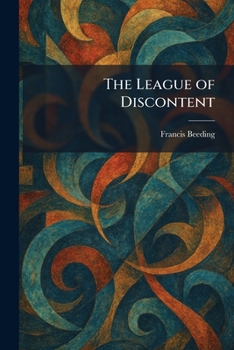
The League of Discontent

Select Format
Select Condition 
Book Overview
"The League of Discontent" is a gripping tale of international intrigue and political conspiracy, featuring the celebrated Colonel Alastair Granby. In this classic thriller, a shadowy organization known as the League of Discontent threatens to destabilize the French government, potentially plunging Europe into a new era of chaos. As tensions rise and the stakes become increasingly high, Granby must navigate a treacherous web of deceit, secret meetings, and dangerous encounters to uncover the truth behind the mysterious league and its elusive leaders.
Written by the prolific duo known as Francis Beeding, this work captures the atmosphere of suspense and high-stakes diplomacy that defined early twentieth-century espionage literature. The narrative masterfully blends elements of mystery and adventure, taking readers from the streets of Paris to the heart of clandestine plots. With its fast-paced action and intricate plotting, "The League of Discontent" remains a compelling example of the golden age of the spy novel, offering a vivid glimpse into the anxieties and excitement of the interwar period.
This work has been selected by scholars as being culturally important, and is part of the knowledge base of civilization as we know it. This work was reproduced from the original artifact, and remains as true to the original work as possible. Therefore, you may see the original copyright references, library stamps (as most of these works have been housed in our most important libraries around the world), and other notations in the work.
This work is in the public domain in the United States of America, and possibly other nations. Within the United States, you may freely copy and distribute this work, as no entity (individual or corporate) has a copyright on the body of the work.
As a reproduction of a historical artifact, this work may contain missing or blurred pages, poor pictures, errant marks, etc. Scholars believe, and we concur, that this work is important enough to be preserved, reproduced, and made generally available to the public. We appreciate your support of the preservation process, and thank you for being an important part of keeping this knowledge alive and relevant.
Customer Reviews
ThriftBooks ® and the ThriftBooks ® logo are registered trademarks of Thrift Books Global, LLC
