


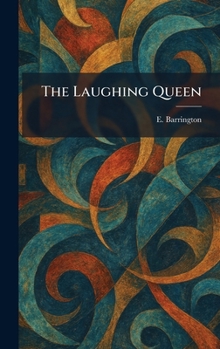
The Laughing Queen

"The Laughing Queen" is a captivating work of historical fiction that breathes new life into the legendary figure of Cleopatra VII, the last active ruler of the Ptolemaic Kingdom of Egypt. The novel explores the complexities of a woman who was as much a brilliant strategist and scholar as she was a symbol of beauty and seduction. The narrative follows Cleopatra's rise to power amidst the shifting sands of Mediterranean politics, chronicling her fateful encounters with the giants of Rome: the ambitious Julius Caesar and the passionate Mark Antony.
Through vivid prose and meticulous attention to historical atmosphere, the author portrays the Egyptian queen not merely as a tragic figure, but as a vibrant, witty, and resilient leader fighting to preserve her kingdom's independence against the encroaching Roman Empire. From the opulent palaces of Alexandria to the high-stakes battlefields of Actium, the story captures the splendor and the peril of the ancient world. Readers are invited into a world of court intrigue, epic romance, and the enduring struggle for sovereignty. "The Laughing Queen" remains a timeless exploration of power, sacrifice, and the human spirit behind one of history's most enduring icons.
This work has been selected by scholars as being culturally important, and is part of the knowledge base of civilization as we know it. This work was reproduced from the original artifact, and remains as true to the original work as possible. Therefore, you may see the original copyright references, library stamps (as most of these works have been housed in our most important libraries around the world), and other notations in the work.
This work is in the public domain in the United States of America, and possibly other nations. Within the United States, you may freely copy and distribute this work, as no entity (individual or corporate) has a copyright on the body of the work.
As a reproduction of a historical artifact, this work may contain missing or blurred pages, poor pictures, errant marks, etc. Scholars believe, and we concur, that this work is important enough to be preserved, reproduced, and made generally available to the public. We appreciate your support of the preservation process, and thank you for being an important part of keeping this knowledge alive and relevant.
Customer Reviews
ThriftBooks ® and the ThriftBooks ® logo are registered trademarks of Thrift Books Global, LLC
