


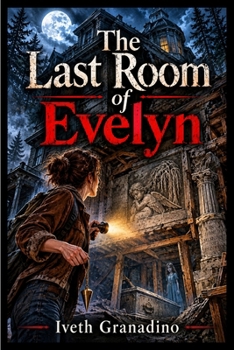
The Last Room of Evelyn

Evelyn Crawford returns to Blackwood Hollow after her estranged mother, Diana, dies, intending to inspect the decaying Victorian estate, settle its legal complications, and sell the property. An architect by profession, Evelyn trusts measurements, materials, and structural evidence-not the superstitions of relatives who insist that the house was never meant to be repaired. But the building defies every ordinary explanation. A central wall is impossibly thick, vibrations pulse through its stonework, and ragged breathing seeps from gaps beneath the floorboards. The air carries the sharp smell of lime, as if the house has been freshly sealed around something hidden.Her uncle Silas warns that Diana spent decades acting as a warden, keeping a terrible presence contained beneath the estate. Evelyn dismisses his warnings until demolition reveals concealed chambers, a child-sized casket, and evidence that the house is connected to a long-buried crime. The voices within its walls belong to people whose deaths were never properly acknowledged, and the structure itself seems to be built from their remains and restless consciousness.As the mystery tightens, Evelyn discovers that her own memories and identity may be part of the house's design. Diana's obsession was not simply to preserve a building, but to keep her daughter from being lost-even at a monstrous cost. With the estate shifting around her and the dead pressing through its foundations, Evelyn must confront the truth of her origins and decide whether exposing the past will free its victims or unleash what her mother spent a lifetime containing.A gothic tale of architectural horror, inherited trauma, and the dangerous boundary between love and possession, The Last Room of Evelyn asks what remains of a person when grief turns them into a monument-and whether a house can ever be emptied of the lives buried inside it. The deeper Evelyn digs, the more the estate's measurements become a map of deliberate concealment: rooms hidden behind masonry, voices trapped in timber, and a foundation that behaves less like a building than a sealed grave. Her professional certainty offers no protection when the house begins answering her presence. The closer she comes to Diana's final secret, the more she must question whether the memories she carries are truly her own. The horror lies not only in what waits below, but in the possibility that the house has been waiting for her.
Customer Reviews
ThriftBooks ® and the ThriftBooks ® logo are registered trademarks of Thrift Books Global, LLC
