


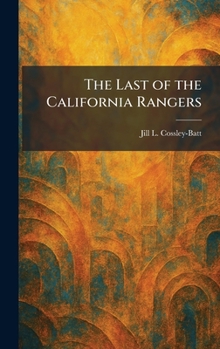
The Last of the California Rangers

"The Last of the California Rangers" is a compelling historical biography that chronicles the life and adventures of Captain William J. Howard, the final surviving member of the legendary state-appointed law enforcement group. Set against the turbulent backdrop of the California Gold Rush, the narrative provides a vivid perspective on the pursuit of the notorious outlaw Joaquin Murrieta and his gang. Beyond the thrill of the chase, the work serves as a rich social history of 19th-century California, detailing the transition from a lawless frontier to an organized state.
Readers are introduced to the rugged realities of pioneer life, the complexities of frontier justice, and the diverse cast of characters who shaped the American West. Through Howard's recollections, the book preserves a vital piece of Americana, offering an intimate look at the men tasked with bringing order to a rapidly expanding and often violent territory. It remains an essential account for those interested in Western lore, the history of the Rangers, and the early days of California statehood.
This work has been selected by scholars as being culturally important, and is part of the knowledge base of civilization as we know it. This work was reproduced from the original artifact, and remains as true to the original work as possible. Therefore, you may see the original copyright references, library stamps (as most of these works have been housed in our most important libraries around the world), and other notations in the work.
This work is in the public domain in the United States of America, and possibly other nations. Within the United States, you may freely copy and distribute this work, as no entity (individual or corporate) has a copyright on the body of the work.
As a reproduction of a historical artifact, this work may contain missing or blurred pages, poor pictures, errant marks, etc. Scholars believe, and we concur, that this work is important enough to be preserved, reproduced, and made generally available to the public. We appreciate your support of the preservation process, and thank you for being an important part of keeping this knowledge alive and relevant.
Customer Reviews
ThriftBooks ® and the ThriftBooks ® logo are registered trademarks of Thrift Books Global, LLC
