


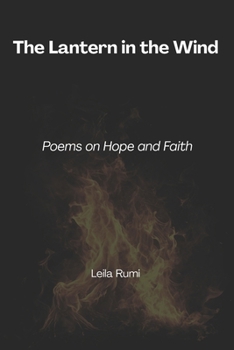
The Lantern in the Wind: Poems on Hope and Faith

In The Lantern in the Wind, Leila Rumi offers a luminous meditation on the persistence of hope and the quiet architecture of faith. Across these pages, light becomes more than symbol-it is breath, ritual, and inheritance. Each poem burns gently against the dark, illuminating the fragile yet resilient spaces of the human spirit: a child's first prayer whispered beside a flickering wick, a mother's hand shielding flame from storm, a stranger's lantern passed across ruin. Through tempest and stillness, through solitude and communion, Rumi reminds us that even the smallest light, tended with love, can steady a trembling world.
Drawing inspiration from Emily Dickinson's spare intensity and Rumi's mystical depth, this collection unfolds in four movements. Together, they trace the full arc of endurance: how faith ignites in the heart, how it flickers through trial, how it steadies in silence, and how it finally returns to the world as shared illumination. These are not poems of escape but of engagement-of holding the flame even when hands shake, of believing that the act of lighting itself is sacred.
Written in an era of fracture and fatigue, The Lantern in the Wind is both elegy and invocation. It invites readers to pause, to breathe, and to rediscover the tender art of keeping faith alive-not as doctrine, but as daily defiance. Here, light is not perfection but presence. And in every poem, Leila Rumi offers what the title promises: a lantern-swaying, fragile, unwavering-against the endless wind.
Related Subjects
PoetryCustomer Reviews
ThriftBooks ® and the ThriftBooks ® logo are registered trademarks of Thrift Books Global, LLC
