


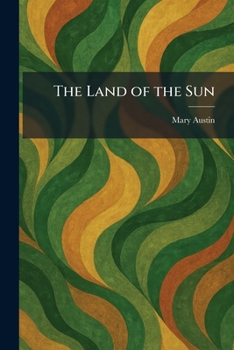
The Land of the Sun

"The Land of the Sun" is a lyrical and evocative exploration of the landscapes of Southern California, penned by the celebrated naturalist and author Mary Austin. Focusing on the diverse topography of the region, Austin guides readers through the arid beauty of the Mojave Desert, the majesty of the Sierra Nevada mountains, and the lush coastal valleys that define the Golden State. Through her keen observation and poetic prose, she captures the unique spirit of the land, detailing its flora, fauna, and the subtle shifts in atmosphere that characterize the American West.
More than a simple travelogue, this work delves into the deep connection between the environment and the human spirit. Austin's writing reflects her profound respect for the natural world and her fascination with the cultural history embedded in the landscape. From the mission trails to the rugged high peaks, "The Land of the Sun" serves as both a historical record of early 20th-century California and a timeless tribute to its enduring natural splendor. Readers interested in nature writing, regional history, and the literary heritage of the Southwest will find this work an essential piece of American environmental literature.
This work has been selected by scholars as being culturally important, and is part of the knowledge base of civilization as we know it. This work was reproduced from the original artifact, and remains as true to the original work as possible. Therefore, you may see the original copyright references, library stamps (as most of these works have been housed in our most important libraries around the world), and other notations in the work.
This work is in the public domain in the United States of America, and possibly other nations. Within the United States, you may freely copy and distribute this work, as no entity (individual or corporate) has a copyright on the body of the work.
As a reproduction of a historical artifact, this work may contain missing or blurred pages, poor pictures, errant marks, etc. Scholars believe, and we concur, that this work is important enough to be preserved, reproduced, and made generally available to the public. We appreciate your support of the preservation process, and thank you for being an important part of keeping this knowledge alive and relevant.
Customer Reviews
ThriftBooks ® and the ThriftBooks ® logo are registered trademarks of Thrift Books Global, LLC
