


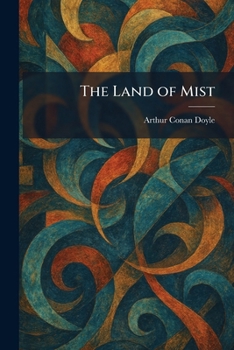
The Land of Mist

Select Format
Select Condition 
Book Overview
"The Land of Mist" is a compelling supernatural adventure that marks a significant departure for Arthur Conan Doyle's iconic character, Professor Challenger. Set against the backdrop of post-World War I London, the story follows the formidable Professor, his daughter Enid, and the intrepid journalist Edward Malone as they venture into the mysterious and controversial world of Spiritualism.
Unlike the prehistoric dangers of "The Lost World", the challenges faced here are ethereal and psychological. As the staunchly skeptical Professor Challenger confronts phenomena that defy his scientific logic, the narrative explores deep themes of life after death, psychic mediumship, and the quest for spiritual truth. Doyle's own profound interest in the paranormal shines through, blending elements of a classic detective story with an earnest investigation into the unknown.
Rich with atmosphere and intellectual curiosity, "The Land of Mist" provides a fascinating look at early 20th-century spiritualist movements while maintaining the high-stakes adventure and sharp characterizations for which Doyle is celebrated. It remains an essential work for those interested in the intersection of science and the supernatural.
This work has been selected by scholars as being culturally important, and is part of the knowledge base of civilization as we know it. This work was reproduced from the original artifact, and remains as true to the original work as possible. Therefore, you may see the original copyright references, library stamps (as most of these works have been housed in our most important libraries around the world), and other notations in the work.
This work is in the public domain in the United States of America, and possibly other nations. Within the United States, you may freely copy and distribute this work, as no entity (individual or corporate) has a copyright on the body of the work.
As a reproduction of a historical artifact, this work may contain missing or blurred pages, poor pictures, errant marks, etc. Scholars believe, and we concur, that this work is important enough to be preserved, reproduced, and made generally available to the public. We appreciate your support of the preservation process, and thank you for being an important part of keeping this knowledge alive and relevant.
Customer Reviews
ThriftBooks ® and the ThriftBooks ® logo are registered trademarks of Thrift Books Global, LLC
