


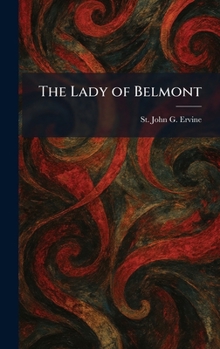
The Lady of Belmont

"The Lady of Belmont" is a compelling five-act play by St. John G. Ervine that serves as a provocative sequel to William Shakespeare's "The Merchant of Venice". Set ten years after the famous trial in Venice, the drama revisits the lives of Portia, Bassanio, and their social circle at the estate in Belmont. The stability of their lives is challenged when Shylock re-emerges, forcing the characters to confront the unresolved tensions and prejudices that defined their past.
Ervine utilizes this narrative to explore the complexities of justice, the fragility of social status, and the enduring nature of ethnic and religious conflict. By deconstructing the supposedly happy ending of Shakespeare's comedy, the play offers a more somber and realistic examination of its characters' motivations and flaws. "The Lady of Belmont" is a significant work of early 20th-century drama, providing a thoughtful commentary on one of literature's most enduring stories. It is an essential read for scholars of Shakespearean adaptations and enthusiasts of modern dramatic literature.
This work has been selected by scholars as being culturally important, and is part of the knowledge base of civilization as we know it. This work was reproduced from the original artifact, and remains as true to the original work as possible. Therefore, you may see the original copyright references, library stamps (as most of these works have been housed in our most important libraries around the world), and other notations in the work.
This work is in the public domain in the United States of America, and possibly other nations. Within the United States, you may freely copy and distribute this work, as no entity (individual or corporate) has a copyright on the body of the work.
As a reproduction of a historical artifact, this work may contain missing or blurred pages, poor pictures, errant marks, etc. Scholars believe, and we concur, that this work is important enough to be preserved, reproduced, and made generally available to the public. We appreciate your support of the preservation process, and thank you for being an important part of keeping this knowledge alive and relevant.
Related Subjects
DramaCustomer Reviews
ThriftBooks ® and the ThriftBooks ® logo are registered trademarks of Thrift Books Global, LLC
