


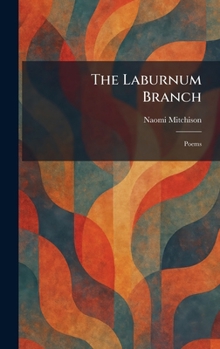
The Laburnum Branch: Poems

"The Laburnum Branch, Poems" is the debut collection of verse by the prolific and influential writer Naomi Mitchison. This work reveals the lyrical foundations of Mitchison's literary career, offering a glimpse into the creative mind of a writer who would go on to become a titan of 20th-century literature. The collection is characterized by its wide-ranging intellectual curiosity and emotional depth, moving seamlessly between intimate personal reflections and broader historical and mythological themes.
The poems within "The Laburnum Branch, Poems" explore the complexities of nature, the nuances of identity, and the weight of history. Mitchison utilizes evocative imagery and a refined rhythmic sensibility to capture the spirit of her age while maintaining a timeless quality. This collection is particularly significant for its exploration of feminine perspectives and its engagement with the landscapes-both physical and psychological-that would later define Mitchison's celebrated historical fiction. It remains a vital contribution to the canon of Scottish and British poetry, essential for any reader interested in the development of modern verse and the early work of a master storyteller.
This work has been selected by scholars as being culturally important, and is part of the knowledge base of civilization as we know it. This work was reproduced from the original artifact, and remains as true to the original work as possible. Therefore, you may see the original copyright references, library stamps (as most of these works have been housed in our most important libraries around the world), and other notations in the work.
This work is in the public domain in the United States of America, and possibly other nations. Within the United States, you may freely copy and distribute this work, as no entity (individual or corporate) has a copyright on the body of the work.
As a reproduction of a historical artifact, this work may contain missing or blurred pages, poor pictures, errant marks, etc. Scholars believe, and we concur, that this work is important enough to be preserved, reproduced, and made generally available to the public. We appreciate your support of the preservation process, and thank you for being an important part of keeping this knowledge alive and relevant.
Related Subjects
PoetryCustomer Reviews
ThriftBooks ® and the ThriftBooks ® logo are registered trademarks of Thrift Books Global, LLC
