


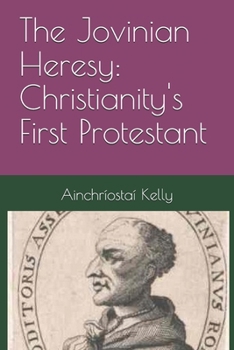
The Jovinian Heresy: Christianity's First Protestant

The Jovinian Heresy: Christianity's First Protestant
"Jovinian: Christianity's First Protestant and the Battle for the Soul of the Early Church" reveals how a forgotten fourth-century theological controversy fundamentally shaped fifteen centuries of Christian doctrine and practice. Jovinian, a Roman monk, developed sophisticated biblical arguments challenging the spiritual superiority of celibacy over marriage, arguing instead that all baptized Christians possessed equal spiritual dignity regardless of their lifestyle choices.
His egalitarian theology threatened powerful ecclesiastical and imperial interests. Pope Siricius, Ambrose of Milan, and Jerome launched coordinated attacks against Jovinian's positions, with Jerome's literary assault becoming a masterpiece of theological polemic. Augustine provided more diplomatic opposition while developing theological frameworks that preserved hierarchy while defending marriage's goodness. Most significantly, Emperor Honorius condemned Jovinian to exile in 398 CE, establishing dangerous precedents for using imperial power to enforce ecclesiastical orthodoxy.
The controversy's institutional legacy proved enormous. It crystallized mandatory clerical celibacy requirements, established systematic spiritual hierarchies that classified Christians into superior and inferior categories, and created authority mechanisms for suppressing theological dissent that persisted throughout Catholic history.
Modern scholarship has dramatically rehabilitated Jovinian's reputation, revealing him as a sophisticated theologian whose writings were systematically destroyed and whose memory was deliberately distorted. His emphasis on baptismal equality and biblical authority has acquired new relevance in contemporary debates about democratic Christianity, women's ordination, and institutional reform, suggesting his ultimate vindication as a prophetic voice whose egalitarian insights anticipated core values of modern Christian movements.
Customer Reviews
ThriftBooks ® and the ThriftBooks ® logo are registered trademarks of Thrift Books Global, LLC
