


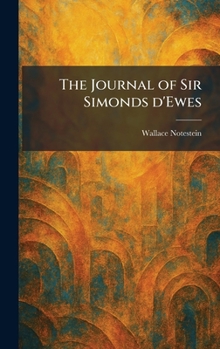
The Journal of Sir Simonds D'Ewes

"The Journal of Sir Simonds d'Ewes" provides an invaluable first-hand account of one of the most transformative periods in British political history. This primary source document offers a detailed and meticulous record of the proceedings within the Long Parliament, captured by Sir Simonds d'Ewes, a prominent antiquary and Member of Parliament. His writings serve as a crucial window into the debates, tensions, and legislative maneuvers that preceded the English Civil War, documenting the shifting dynamics between the monarchy and the legislative body.
Focused on the internal workings of the House of Commons, this journal illuminates the perspectives of the parliamentarians during a time of immense social and religious upheaval. D'Ewes's commitment to recording the speeches and actions of his contemporaries makes this work a cornerstone for any study of 17th-century constitutional history. It captures the voices of key figures and the granular details of parliamentary procedure that would otherwise be lost to time. For scholars of the Stuart era and readers interested in the evolution of democratic institutions, "The Journal of Sir Simonds d'Ewes" stands as a vital piece of historical evidence, offering a profound look at the origins of modern governance in Great Britain.
This work has been selected by scholars as being culturally important, and is part of the knowledge base of civilization as we know it. This work was reproduced from the original artifact, and remains as true to the original work as possible. Therefore, you may see the original copyright references, library stamps (as most of these works have been housed in our most important libraries around the world), and other notations in the work.
This work is in the public domain in the United States of America, and possibly other nations. Within the United States, you may freely copy and distribute this work, as no entity (individual or corporate) has a copyright on the body of the work.
As a reproduction of a historical artifact, this work may contain missing or blurred pages, poor pictures, errant marks, etc. Scholars believe, and we concur, that this work is important enough to be preserved, reproduced, and made generally available to the public. We appreciate your support of the preservation process, and thank you for being an important part of keeping this knowledge alive and relevant.
Customer Reviews
ThriftBooks ® and the ThriftBooks ® logo are registered trademarks of Thrift Books Global, LLC
