


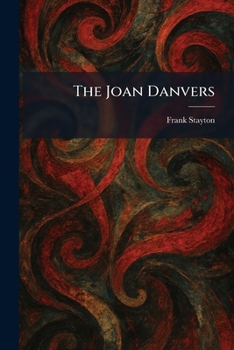
The Joan Danvers

"The Joan Danvers" is a compelling three-act drama by Frank Stayton that explores the volatile dynamics of a middle-class English family during the early 20th century. Set within the confines of a rigid domestic sphere, the play centers on the Danvers household, which is presided over by the stern and uncompromising James Danvers. A man of tradition and iron will, James finds his absolute authority challenged as his children begin to assert their own identities and seek independence from his domineering influence.
At the heart of the narrative is the character of Joan, whose struggle for self-determination serves as a catalyst for the family's internal tensions. Stayton masterfully depicts the generational clash between Victorian-era discipline and the burgeoning modernity of the post-war era. Through sharp dialogue and keen social observation, the work examines universal themes of duty, rebellion, and the heavy price of patriarchal control. "The Joan Danvers" remains a poignant example of British social realism, offering a window into the shifting moral landscape of the 1920s and the timeless conflict between parental expectations and the pursuit of individual freedom.
This work has been selected by scholars as being culturally important, and is part of the knowledge base of civilization as we know it. This work was reproduced from the original artifact, and remains as true to the original work as possible. Therefore, you may see the original copyright references, library stamps (as most of these works have been housed in our most important libraries around the world), and other notations in the work.
This work is in the public domain in the United States of America, and possibly other nations. Within the United States, you may freely copy and distribute this work, as no entity (individual or corporate) has a copyright on the body of the work.
As a reproduction of a historical artifact, this work may contain missing or blurred pages, poor pictures, errant marks, etc. Scholars believe, and we concur, that this work is important enough to be preserved, reproduced, and made generally available to the public. We appreciate your support of the preservation process, and thank you for being an important part of keeping this knowledge alive and relevant.
Customer Reviews
ThriftBooks ® and the ThriftBooks ® logo are registered trademarks of Thrift Books Global, LLC
