


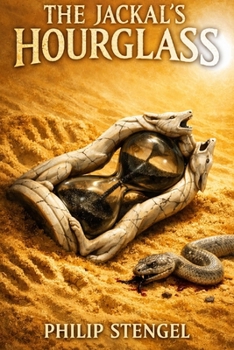
The Jackal's Hourglass

In the desert, survival is never free.
In the prologue, Roman officer Lucius Varro is left to die in the wastes after a massacre, only to find a cold, impossible hourglass half-buried in the sand. When he grips it, time itself seems to stumble. A viper dies without being touched. Water appears. And Lucius learns the terrible rule at the center of the artifact: it does not save lives out of mercy. It purchases them.
Centuries later, archaeologist Dr. Leila Nassar arrives in Egypt's Western Desert to investigate a buried structure beneath black stone. With ambitious financier Marcus Vance, local guide Omar Rashid, and young researcher Hana el-Sayed, she uncovers a sealed chamber marked by a carved jackal and a place the old stories describe not as a tomb, but as an account-book buried in sand. When greed cracks the chamber open, an alabaster box shatters and the hourglass inside begins collecting its price again.
What follows is not just archaeological horror, but a reckoning with debt, mortality, and the hidden arithmetic of survival. The Jackal's Hourglass is a psychological folkloric horror novel about desert contracts, stolen years, and the terror of discovering that some artifacts do not preserve history. They keep accounts.
Customer Reviews
ThriftBooks ® and the ThriftBooks ® logo are registered trademarks of Thrift Books Global, LLC
