


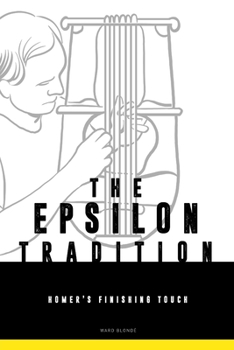
The Ionian Epsilon Tradition: Homer's Finishing Touch
No Customer Reviews

This book describes the Ionian Epsilon Tradition, the last and youngest oral tradition in the series of five Homeric oral traditions that Ward Blond? distinguishes after an analysis of the Iliad. This book also sheds light on a theory about how the Iliad became fixed. The Ionian Epsilon Tradition appears in the Iliad merely as a finishing layer over an existing framework. Only here and there does the Iliad contain a passage that contains almost no characteristics of the older oral traditions. Still, of all five oral traditions, the Ionian Epsilon Tradition is best documented and yields 104 different oral characteristics. The content of those oral characteristics shows that the Ionian Epsilon Tradition originated in aristocratic circles that practiced the guest-friendship at the end of the Dark Ages. In the Odyssey this oral tradition is more prominent. Blond?'s analysis shows that not one, but at least four bards improvised the final verses of the Iliad through alternate improvisation: the Achilleus Bard, the Narrative Bard, the War Bard, and the God Bard. These bards had separate specialties, including the older oral traditions, but also special roles, such as the Early Dramatic Role and the Achilleus Role. Homer's finishing touch symbolizes the Ionian Epsilon Tradition.
Format:Paperback
Language:English
ISBN:B0BW2SL6H4
ISBN13:9798379056872
Release Date:December 2022
Publisher:Independently Published
Length:204 Pages
Weight:0.67 lbs.
Dimensions:0.5" x 6.0" x 9.0"
Related Subjects
HistoryCustomer Reviews
0 rating
Copyright © 2026 Thriftbooks.com
Terms of Use | Privacy Policy | Do Not Sell/Share My Personal Information | Cookie Policy | Cookie Preferences | Accessibility Statement
ThriftBooks ® and the ThriftBooks ® logo are registered trademarks of Thrift Books Global, LLC
ThriftBooks ® and the ThriftBooks ® logo are registered trademarks of Thrift Books Global, LLC
