



Select Format
Select Condition 
Book Overview
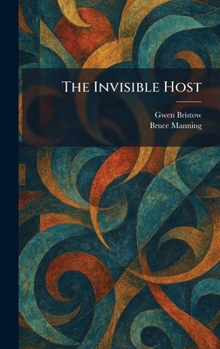
"The Invisible Host" is a chilling masterpiece of suspense and a foundational entry in the closed-circle mystery genre. Eight strangers receive mysterious invitations to a lavish penthouse party atop a New Orleans skyscraper, only to find themselves trapped in a deadly game of wits. Their anonymous host, speaking through a hidden speaker, reveals a sinister plan: by the end of the night, each of the guests is destined to die. As the clock ticks and the body count rises, the survivors are forced to confront their own secrets and suspicions in a desperate attempt to unmask their killer.
Written by Gwen Bristow and Bruce Manning, this 1930 thriller predates and mirrors themes found in some of the most famous works of the Golden Age of Mystery. Its blend of high-society drama and calculated psychological horror creates a claustrophobic atmosphere that keeps readers guessing until the final revelation. "The Invisible Host" is a sharp, fast-paced whodunit that explores the depths of human fear and the dark consequences of past transgressions. This gripping narrative remains a compelling example of early twentieth-century crime fiction and served as the basis for the classic film The Ninth Guest.
This work has been selected by scholars as being culturally important, and is part of the knowledge base of civilization as we know it. This work was reproduced from the original artifact, and remains as true to the original work as possible. Therefore, you may see the original copyright references, library stamps (as most of these works have been housed in our most important libraries around the world), and other notations in the work.
This work is in the public domain in the United States of America, and possibly other nations. Within the United States, you may freely copy and distribute this work, as no entity (individual or corporate) has a copyright on the body of the work.
As a reproduction of a historical artifact, this work may contain missing or blurred pages, poor pictures, errant marks, etc. Scholars believe, and we concur, that this work is important enough to be preserved, reproduced, and made generally available to the public. We appreciate your support of the preservation process, and thank you for being an important part of keeping this knowledge alive and relevant.
Customer Reviews
ThriftBooks® and the ThriftBooks® logo are registered trademarks of Thrift Books Global, LLC
