


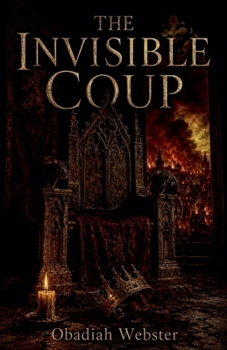
The Invisible Coup

In 1347, a Mongol warlord loaded plague-ridden corpses onto catapults and fired them over the walls of a Genoese trading post on the Black Sea coast. What he launched was not merely a siege weapon. It was the end of the medieval world.
The Black Death killed between seventy-five and two hundred million people in five years. It wiped out a third of Europe. It killed kings, cardinals, and the banking dynasties that financed civilization. It killed the certainties that had organized human society for three centuries: that the Church would protect the faithful, that kings ruled by divine right, that the poor had no leverage over the powerful.
But someone always profits from catastrophe. And the questions this book asks - who knew? Who stayed silent? Who benefited? - lead into some of history's darkest and least examined corners.
Was Venice's silence about the approaching plague a calculated decision to protect trade? Were the mass persecutions of Jewish communities truly spontaneous rage - or does the suspicious consistency of the accusations across hundreds of disconnected cities suggest something more organized? What did the Pope's physicians understand about disease transmission that they chose not to share with the dying public? Who were the real inheritors when the world's most powerful banking families collapsed overnight?
The Invisible Coup is narrative history written with the pace of a thriller and the precision of detective work. It follows six unforgettable historical figures across three continents: Ibn Battuta, the Moroccan traveler who witnessed the plague on three continents and recorded what the official accounts left out; Giovanni Boccaccio, the Florentine writer who locked himself in a villa and turned his terror into literature; Pope Clement VI, who survived the catastrophe in sealed apartments while his city died outside his door; Edward III of England, the conquering king who lost his daughter, his social order, and his certainty in a single year; Jani Beg, the Mongol Khan whose decision at the walls of Caffa launched history's first documented biological weapon; and Agn s, the French peasant woman who refused to return to serfdom after the dying stopped, and in doing so began the dismantling of feudalism.
Together, their stories reveal not only how the world ended - but how the world that replaced it was built. The Renaissance. The Reformation. The collapse of feudalism. The birth of the European middle class. The printing press. The secular state. All of it constructed from the rubble of fifty million deaths, by people who had nothing left to lose and a great deal left to build.
This is the story of the greatest political revolution in human history. The one that no army ordered, no king planned, and no parliament voted for. The invisible coup.
Customer Reviews
ThriftBooks ® and the ThriftBooks ® logo are registered trademarks of Thrift Books Global, LLC
