


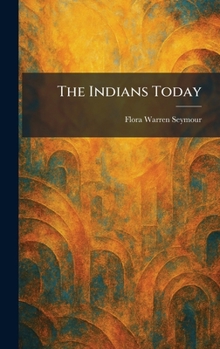
The Indians Today

"The Indians Today" provides a detailed exploration of the lives, cultures, and status of Native American tribes during the early 20th century. Written by Flora Warren Seymour, a notable figure who served as the first woman on the Board of Indian Commissioners, this work offers a contemporary perspective on the transition of Indigenous peoples within the context of 1920s American society. The book examines various facets of tribal existence, including educational systems, economic industry, health conditions, and the evolving legal and social relationship between Native nations and the federal government.
Through its informative narrative, the work highlights the diverse traditions of different tribes while addressing the socio-political challenges and shifts in government policy that defined the era. "The Indians Today" serves as a significant historical document, capturing the realities of reservation life and the broader efforts toward assimilation and citizenship. This work remains an essential resource for those interested in Native American history and sociology, providing a clear window into the cultural landscape and the lived experiences of Indigenous communities at a critical juncture in North American history.
This work has been selected by scholars as being culturally important, and is part of the knowledge base of civilization as we know it. This work was reproduced from the original artifact, and remains as true to the original work as possible. Therefore, you may see the original copyright references, library stamps (as most of these works have been housed in our most important libraries around the world), and other notations in the work.
This work is in the public domain in the United States of America, and possibly other nations. Within the United States, you may freely copy and distribute this work, as no entity (individual or corporate) has a copyright on the body of the work.
As a reproduction of a historical artifact, this work may contain missing or blurred pages, poor pictures, errant marks, etc. Scholars believe, and we concur, that this work is important enough to be preserved, reproduced, and made generally available to the public. We appreciate your support of the preservation process, and thank you for being an important part of keeping this knowledge alive and relevant.
Customer Reviews
ThriftBooks ® and the ThriftBooks ® logo are registered trademarks of Thrift Books Global, LLC
