


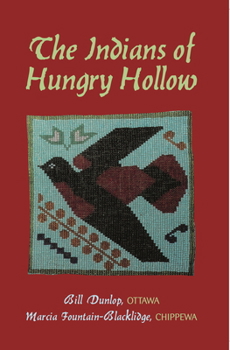
The Indians of Hungry Hollow

Select Format
Select Condition 
Book Overview
Michael Blake's Dances with Wolves transformed denigrating Indian sterotypes and created widespread interest in Native American culture. The subsequent popularity of books on this topic underscores the power of a tale well told. While Blake's story relates the early chapters of Native Americans' survival struggles, later accounts of this struggle remain untold.
The Indians of Hungry Hollow authentically presents these later chapters. The days of Hungry Hollow have long passed, but the opportunity to capture its lessons of community, strong values, and an urge to thrive in matters of the heart and soul are still very much with us.
These are stories of survival, community, sharing, and caring. The situations are often dire: winter in the middle of the Depression; an Indian settlement illegally taken from its inhabitants and set on fire; boaters stranded by bad weather and threatened with death. But if the situations are extreme, the telling of the stories is consistently optimistic yet completely without self-pity or sentimentality, and the characters always find a way through the darkness.
Dunlop's unique style of storytelling is compelling and informative, and these historically significant stories help to elucidate the transition of the American Indian culture from post-tribal days to the present.
Bill Dunlop is a respected Ottawa elder and storyteller. Marcia Fountain-Blacklidge is a professional writer, counselor, and consultant.
Format:Paperback
Language:English
ISBN:0472086537
ISBN13:9780472086535
Release Date:July 2004
Publisher:University of Michigan Regional
Length:236 Pages
Weight:0.75 lbs.
Dimensions:0.6" x 6.0" x 9.0"
Customer Reviews
4 ratings
Excellent Book
Published by Thriftbooks.com User , 19 years ago
My dad was one of the "Sheridan Street Rats" who grew up with Bill Dunlop, so I heard many stories from him over the years that were also told in the book. I would often listen to my dad tell stories that involved Bill, so his name was very familiar to me when I finally had a chance to first meet him a couple of years ago. The book is very engaging and paints a very vivid picture of life in an Indian neighborhood in Northern Lower Michigan during the Depression.
The Indians of Hungry Hollow
Published by Thriftbooks.com User , 21 years ago
As a kid, this book was a perfect reading level for me. It wasn't to hard. I would say that readers of all ages can read this. Sometimes it was very sad and gloomy and other times it was halarious. It shows how love was so important in the days of the great depresion. Non-indians were so cruel to the Indians those days. I have met the author myself. He seems to be a very kind man. I just cant see how he made it through all the things that happened. Again I recomend this book to all ages. i guarentee you will like it.
Authentic story of Native stuggle and hope
Published by Thriftbooks.com User , 21 years ago
This true story of Depression life in Hungry Hollow in Petoskey, Michigan is compelling and heartfelt. Bill Dunlop writes as well as the young Hemingway, who lived in the same town. The many adventures of the young boys that were friends are as captiving as in the movie "Stand by Me." You will have difficulty putting down this book.
Real history, real people.
Published by Thriftbooks.com User , 21 years ago
A beautiful book. Anyone reading Mr. Dunlop's introduction and the first chapter, "Boxcar Blues," will be hooked. In that chapter Mr. Dunlop tells how his father organized the young boys to collect bottles with caps, clean them and fill them with spring water to pass out to families riding box-cars seeking work during the depth of the Depression. His voice speaks with compassion, grace and a dignity that seems increasingly rare today. Although the stories are told from the point of view of a young boy growing up poor and Indian during the Depression in a small northern Michigan town, the themes of community and sharing are universal. This is as much a story about man's best instincts as it is about the individuals in Hungry Hollow.
Copyright © 2026 Thriftbooks.com Terms of Use
| Privacy Policy | Do Not
Sell/Share My Personal Information | Cookie Policy | Cookie Preferences | Accessibility Statement
ThriftBooks® and the ThriftBooks® logo are registered trademarks of Thrift Books Global, LLC
ThriftBooks® and the ThriftBooks® logo are registered trademarks of Thrift Books Global, LLC
