


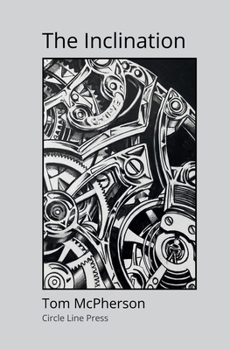
The Inclination

Set in West Berlin in the early 1970s, The Inclination follows a small group of artists preparing a play in a borrowed flat. Arnold directs. Michael observes. Nancy manages what cannot be named. Olivia performs. The work is provisional, careful, and tightly contained.
As attention enters the room, nothing is explicitly forbidden. Instead, behaviour subtly shifts. Language tightens. Decisions narrow. What begins as a fragile experiment starts to account for itself. Efficiency replaces curiosity. Control disguises itself as care. The conditions that once made continuation possible begin to erode without force or confrontation.
Told through quiet observation rather than drama, the novel traces a movement from rehearsal to exposure, from collapse to dispersal, and finally to departure. It is a study of pressure rather than conflict, examining how creative work thins not under censorship, but under scrutiny, and how endings arrive without spectacle.
Spare, precise, and European in sensibility, The Inclination is a novel of rooms, gestures, silence, and proportion, about what happens when permission itself becomes the pressure.
Customer Reviews
ThriftBooks® and the ThriftBooks® logo are registered trademarks of Thrift Books Global, LLC
