


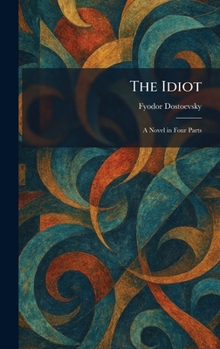
The Idiot: A Novel in Four Parts

In "The Idiot a Novel in Four Parts", Fyodor Dostoevsky presents a profound exploration of human morality and spiritual purity through the eyes of Prince Lev Nikolayevich Myshkin. After returning to the high society of St. Petersburg from a Swiss sanatorium, the Prince-a man of childlike innocence and profound empathy-finds himself entangled in the complex and often destructive lives of those around him. His struggle to maintain his virtuous nature in a world driven by greed, obsession, and social artifice creates a compelling narrative that is both heartbreaking and deeply philosophical.
The novel masterfully weaves together themes of redemption and psychological depth, as Myshkin's presence acts as a catalyst for the hidden desires and internal conflicts of the Russian elite. From the volatile and beautiful Nastasya Filippovna to the ambitious and troubled Rogozhin, Dostoevsky's characters represent the full spectrum of the human soul. "The Idiot a Novel in Four Parts" remains one of the most significant works of world literature, offering a timeless meditation on the nature of goodness and the challenges of living an authentic life. This masterpiece of psychological fiction continues to captivate readers with its intense emotional stakes and its haunting depiction of the tragedy inherent in the human condition.
This work has been selected by scholars as being culturally important, and is part of the knowledge base of civilization as we know it. This work was reproduced from the original artifact, and remains as true to the original work as possible. Therefore, you may see the original copyright references, library stamps (as most of these works have been housed in our most important libraries around the world), and other notations in the work.
This work is in the public domain in the United States of America, and possibly other nations. Within the United States, you may freely copy and distribute this work, as no entity (individual or corporate) has a copyright on the body of the work.
As a reproduction of a historical artifact, this work may contain missing or blurred pages, poor pictures, errant marks, etc. Scholars believe, and we concur, that this work is important enough to be preserved, reproduced, and made generally available to the public. We appreciate your support of the preservation process, and thank you for being an important part of keeping this knowledge alive and relevant.
Customer Reviews
ThriftBooks® and the ThriftBooks® logo are registered trademarks of Thrift Books Global, LLC
