


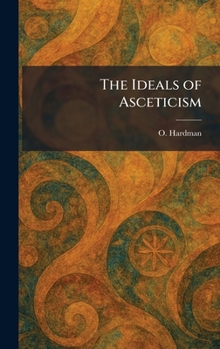
The Ideals of Asceticism

"The Ideals of Asceticism" offers a profound and systematic exploration of the historical and spiritual principles underlying the ascetic life. Written by O. Hardman, a distinguished scholar and theologian, this work investigates the diverse motivations and manifestations of self-denial throughout religious history. Hardman categorizes the ascetic impulse into distinct ideals, such as the struggle for spiritual mastery, the desire for fellowship with the divine, and the pursuit of moral purification.
By examining ascetic practices across various traditions while maintaining a primary focus on Christian thought, the book delves into the psychological and social implications of the ascetic path. Hardman argues that asceticism is not merely a rejection of the world, but a constructive effort to achieve higher spiritual goals. The text remains an essential resource for those interested in theology, religious history, and the evolution of spiritual discipline. This scholarly yet accessible study provides readers with a deeper understanding of how the renunciation of physical comforts has been used as a tool for personal transformation and religious devotion.
This work has been selected by scholars as being culturally important, and is part of the knowledge base of civilization as we know it. This work was reproduced from the original artifact, and remains as true to the original work as possible. Therefore, you may see the original copyright references, library stamps (as most of these works have been housed in our most important libraries around the world), and other notations in the work.
This work is in the public domain in the United States of America, and possibly other nations. Within the United States, you may freely copy and distribute this work, as no entity (individual or corporate) has a copyright on the body of the work.
As a reproduction of a historical artifact, this work may contain missing or blurred pages, poor pictures, errant marks, etc. Scholars believe, and we concur, that this work is important enough to be preserved, reproduced, and made generally available to the public. We appreciate your support of the preservation process, and thank you for being an important part of keeping this knowledge alive and relevant.
Customer Reviews
ThriftBooks ® and the ThriftBooks ® logo are registered trademarks of Thrift Books Global, LLC
