


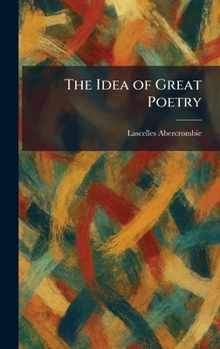
The Idea of Great Poetry

"The Idea of Great Poetry" is a profound exploration into the nature of poetic excellence and the qualities that elevate verse to the status of enduring literature. Written by the distinguished poet and critic Lascelles Abercrombie, this work delves into the philosophical and aesthetic foundations of the craft, seeking to define what distinguishes a truly great poem from merely competent writing.
Abercrombie examines the relationship between language, emotion, and intellectual depth, arguing that great poetry requires a unique synthesis of form and substance. He explores how poets utilize rhythm, imagery, and structure to create a transformative experience for the reader, ultimately aiming for a "poetic world" that resonates across generations. The text provides insightful analyses of classical and modern works, offering a framework for understanding the sublime in literature.
This volume serves as an essential resource for students of literature, aspiring poets, and anyone interested in the mechanics of literary genius. By investigating the criteria for greatness, Abercrombie invites readers to engage more deeply with the power of the written word and the timeless impact of masterly composition.
This work has been selected by scholars as being culturally important, and is part of the knowledge base of civilization as we know it. This work was reproduced from the original artifact, and remains as true to the original work as possible. Therefore, you may see the original copyright references, library stamps (as most of these works have been housed in our most important libraries around the world), and other notations in the work.
This work is in the public domain in the United States of America, and possibly other nations. Within the United States, you may freely copy and distribute this work, as no entity (individual or corporate) has a copyright on the body of the work.
As a reproduction of a historical artifact, this work may contain missing or blurred pages, poor pictures, errant marks, etc. Scholars believe, and we concur, that this work is important enough to be preserved, reproduced, and made generally available to the public. We appreciate your support of the preservation process, and thank you for being an important part of keeping this knowledge alive and relevant.
Customer Reviews
ThriftBooks ® and the ThriftBooks ® logo are registered trademarks of Thrift Books Global, LLC
