


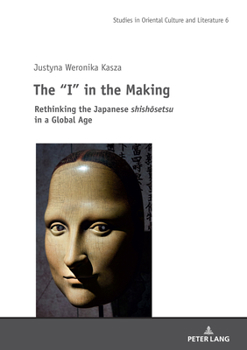
The "I" in the Making: Rethinking the Japanese Shishōsetsu in a Global Age

The book centres around the topic of subjectivity and self-representation in contemporary Japanese literature and offers an evaluation of a genre known as shishōsetsu (I-novel). The objective is to reassess the works of Dazai Osamu, Ōe Kenzaburō, Endō Shūsaku, Murakami Haruki, and translingual writers (Mizumura Minae, Hideo Levy, Tawada Yōko) to demonstrate the flexible treatment of personal experiences and the ambiguous relations between the character, narrator, and the writing persona. By making references to world fiction, the book investigates narrative and linguistic challenges in expressing the "self." The study explores shishōsetsu as the stories on constructing the identities between cultures, languages and literary canons, and testimonies of untranslatability of the self.
Customer Reviews
ThriftBooks® and the ThriftBooks® logo are registered trademarks of Thrift Books Global, LLC
