


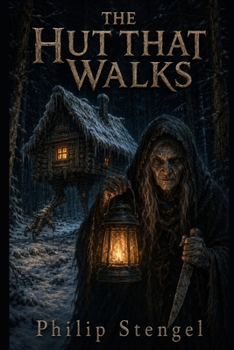
The Hut That Walks

In Voronka, the children know the rules before they know their letters.
Do not chase anything past the split birch.
Do not answer if someone calls your name from the trees.
Do not follow laughter after dark.
For years, the village has survived by pretending the Black Hollow is only forest and Baba Yaga is only a name whispered to frighten the young. Then the children begin to disappear.
A boy vanishes from beside the hearth. Bare footprints cross the snow and stop where no human trail should end. A child's laughter comes from the trees in voices that should belong to the living, the missing, and the dead. And somewhere beyond the frozen fields, a crooked hut walks on tall bird legs, turning one red window toward Voronka.
Olena, a widow still haunted by the disappearance of her husband Pavlo, hears the Hollow before others are willing to believe it. With Dmytro, Svitlana, and a handful of frightened villagers, she follows the signs into the forest and discovers a horror deeper than one witch's appetite. The stolen children are alive, but the Hollow keeps them inside an older debt, one tied to bread, blood, roots, broken names, and a pact the village has allowed itself to forget.
To bring the children home, Olena must face Baba Yaga's trials, the walking hut, the chamber beneath the roots, and the terrible truth of what Voronka once promised the dark.
The Hut That Walks is a dark folkloric horror novel about Baba Yaga, a village at the edge of a living forest, stolen children, old bargains, and the price of carrying names back out of the woods.
Customer Reviews
ThriftBooks ® and the ThriftBooks ® logo are registered trademarks of Thrift Books Global, LLC
