


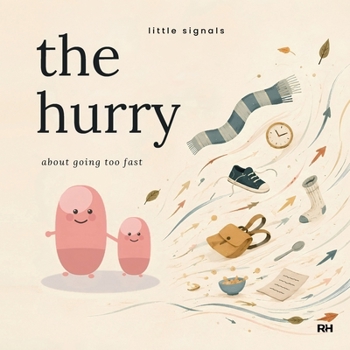
The Hurry: A Little Signals story about going too fast

Some mornings the clock goes faster than the room.
Little Bean has somewhere to be. The morning has started without it. And the faster it tries to go, the slower it gets - fumbly fingers, a shoe that will not go on, a coat with too many arms.
Then Big Bean stops. Not to fix it. Just to notice something first: its own chest, going fast.
"I am hurrying too," said Big Bean. "And hurrying is catching."
Hurry travels downwards. A child's nervous system reads the pace of the adult beside it long before it hears the words. When we speed up, they speed up - and a hurried body gets clumsy, not quick. So the first move is not to hurry the child. It is to notice your own chest, and slow that.
Fumbling fingers, rising shoulders, shrinking words. These are signals, not stalling.
A small tool to share: stop first, then slow, then go.
For ages 4-8, and for any grown-up who has said quick more times this week than they meant to. Being a little bit late is a smaller cost than a morning that ends in tears.
Little Signals - quiet stories and tools that help small humans notice their signals and find their way back to steady.
No quick fixes. No hype. No shortcuts. Regulation before optimisation.
Customer Reviews
ThriftBooks ® and the ThriftBooks ® logo are registered trademarks of Thrift Books Global, LLC
