


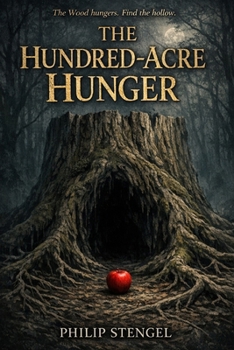
The Hundred-Acre Hunger

Five years after her brother Theo vanished while pursuing an impossible theory about the true Hundred Acre Wood, folklorist Lena Carver receives a note in his handwriting: The Wood hungers. Find the hollow.
The message leads her to a hidden path behind an old Sussex churchyard and into a place that should not exist, a ruined eidolon built from childhood story, abandonment, and appetite. Here, the beloved figures of the old tales have curdled into something monstrous. Pooh is no longer a gentle fool but a mimic predator who harvests memory in poisoned honey. Piglet has become fear made flesh. Eeyore buries the emptied. Owl preserves stolen names in a cathedral archive of grief. Rabbit keeps the hollowed docile inside false homes built from comforting lies.
As Lena descends deeper into the Wood, she discovers Theo was right about everything. The place is alive. It feeds on nostalgia, memory, and the emotional afterlife of stories kept alive in the outside world. Worse, she finds her brother not dead, but reduced, his bright parts devoured, his identity thinned to a shell still walking.
To save him, Lena must confront the thing at the center of the Wood before it consumes what remains of both of them. But in a place built from corrupted affection, every mercy is bait, every path leads inward, and every act of remembrance risks becoming food.
The Hundred-Acre Hunger is a literary horror novel about grief, story-corruption, and the nightmare that begins when childhood wonder is left to rot into need.
Customer Reviews
ThriftBooks ® and the ThriftBooks ® logo are registered trademarks of Thrift Books Global, LLC
