


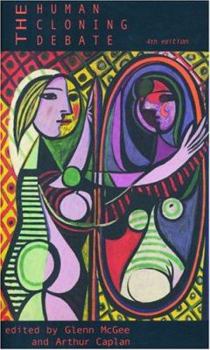
The Human Cloning Debate

McGee and Caplan (both senior fellows, Center for Bioethics, U. of Pennsylvania) provide an overview of the human cloning debate and its stem cell research offshoot through the presentation of a range... This description may be from another edition of this product.
Format:Paperback
Language:English
ISBN:1893163652
ISBN13:9781893163652
Release Date:January 2004
Publisher:Berkeley Hills Books
Length:320 Pages
Weight:0.88 lbs.
Dimensions:1.0" x 5.5" x 8.9"
Customer Reviews
5 ratings
Useful collection of contributions to this important debate
Published by Thriftbooks.com User , 21 years ago
This is a thought-provoking collection of essays by 25 contributors, pro- and anti-cloning, scientists, doctors, academics, researchers, journalists and the odd US President. The most mind-changing essay for this reviewer was Ronald Bailey's `Cloning babies is not inherently immoral'. Throughout history, some have violently opposed scientific developments. For example, Guardian columnist Jeremy Rifkin described biotechnology as `a form of annihilation every bit as deadly as nuclear holocaust, and even more profound'. This dispute between science and anti-science, progress and reaction, the materialist and idealist philosophies, can never be resolved. It is a fundamental philosophic divide that cannot be bridged. One or other must prevail. The argument that we must wait for a consensus to emerge is reactionary, for this would mean waiting forever. No amount of additional debate can ever win round the opposition to progress, because that opposition is entrenched behind ramparts of dogma; faith-based, it is impervious to evidence and reason. Presidential calls for a moratorium are prevarication. Similarly, the search for absolute safety, like all searches for absolutes, is a delusion, which makes the precautionary principle another recipe for stasis. Some who oppose cloning opposed In Vitro Fertilisation earlier. Possibly one million babies have been born through IVF since 1978. This safe and beneficial procedure arose from decades of refining techniques in a variety of animals. Safe cloning will similarly result from animal research: a ban on research would prevent work into making cloning safe. In Germany the government has banned all research work on embryos, so Germany makes no contribution and has no influence on this matter. Britain's parliament passed a law that regulates therapeutic cloning, but unfortunately bans all efforts at reproductive cloning. Fear of biotechnology has done great harm, because technological stagnation poses greater risks than technological innovation. Banning stem cell research or research into reproductive cloning would prevent many promising developments in medical research; it could drive research to countries less equipped to balance safety with development. The biotechnology revolution has already brought enormous benefits, IVF for instance, and will bring many more, but only if we encourage and support research into cloning.
The Debate
Published by Thriftbooks.com User , 24 years ago
The human cloning debate provides a comprehensive view of the debate of human cloning and the ethical reasoning behind it. I learned that a sheep was not the first thing to be cloned, it was actually a piece of american cheese back in 1992. This book provides views from both sides of the spectrum and give you an unbias approach to your view on human cloning.
Most Informative Book I have read yet this year
Published by Thriftbooks.com User , 24 years ago
"The Human Cloning Debate" is the most informative book have read this year. The essays are fairly well balanced although there are more that are opposed than in favor. But, there are probably more people opposed to human cloning than are in favor. At any rate this is an excellent book.There are several really good layman's descriptions of exactly what the biological results of cloning are. Big surprise, it is not what the media have led us to believe. On the other hand knowing the exact results does not seem to change the preponderance of opinion one way or the other. One of the best essays in the book for describing the science was written by Phillip Kitcher, although I think the conclusions he reached were totally off base. He wrote "Reality is much more sobering, and it is a good idea to preface debates about the morality of human cloning with a clear understanding of the scientific facts" To many of us forced our ideas about cloning before we knew the facts. Perhaps the whole debate was summed up in a single sentence written by Jonathan R. Cohen n his essay "Cloning in Jewish Thought". "Ultimately, cloning challenges us to consider how important our genetic structure is to our sense of self."I would recommend this book to anyone who is interested in the ethical debate surrounding cloning.
Excellent and Engaging
Published by Thriftbooks.com User , 27 years ago
We looked at several cloning books for our coffeehouse conversations series. This was the only one with good science as well as provocative ethics material. The article by Art Caplan and the religious material are excellent. This is the only book with an article by cloning scientists in it, and I found Ian Wilmut's perspective on the difference between adoption and cloning to be fascinating.
Very controversial.
Published by Thriftbooks.com User , 27 years ago
I saw this book reviewed in the New York Times and chose it for teaching my high school seniors about Dolly and human cloning. It is very comprehensive, with the President's commission report and lots of stuff that isn't in the other three anthologies. The science and the introduction are great for students. Wilmut's article is wrong, I think. But it is very controversial and interesting. This seems to be the only thing he has written about the ethics of the Sheep he made. The students like it very much.
Copyright © 2026 Thriftbooks.com Terms of Use
| Privacy Policy | Do Not
Sell/Share My Personal Information | Cookie Policy | Cookie Preferences | Accessibility Statement
ThriftBooks® and the ThriftBooks® logo are registered trademarks of Thrift Books Global, LLC
ThriftBooks® and the ThriftBooks® logo are registered trademarks of Thrift Books Global, LLC
