


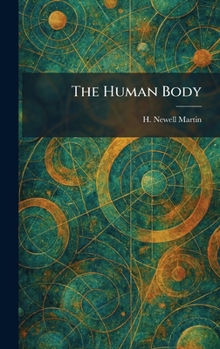
The Human Body

"The Human Body" by H. Newell Martin is a seminal scientific treatise that offers a comprehensive exploration of human anatomy and physiology. Written by a distinguished scholar and a pioneer in biological education, this work provides a meticulous examination of the physical structures and biological processes that sustain human life.
The text delves into the intricacies of the skeletal, muscular, nervous, and circulatory systems, presenting complex biological concepts with clarity and precision. Martin's approach bridges the gap between basic anatomical study and the functional dynamics of living organisms, emphasizing the interdependence of various bodily organs and their roles in maintaining health and vitality.
As a foundational text in the field of medical science, "The Human Body" serves as both an educational resource and a historical record of early physiological knowledge. It remains a valuable reference for those interested in the history of medicine and the evolution of biological instruction, showcasing the rigorous scientific inquiry and descriptive excellence of one of the era's most respected experts. This work stands as a testament to the enduring quest to understand the complex machinery of human existence.
This work has been selected by scholars as being culturally important, and is part of the knowledge base of civilization as we know it. This work was reproduced from the original artifact, and remains as true to the original work as possible. Therefore, you may see the original copyright references, library stamps (as most of these works have been housed in our most important libraries around the world), and other notations in the work.
This work is in the public domain in the United States of America, and possibly other nations. Within the United States, you may freely copy and distribute this work, as no entity (individual or corporate) has a copyright on the body of the work.
As a reproduction of a historical artifact, this work may contain missing or blurred pages, poor pictures, errant marks, etc. Scholars believe, and we concur, that this work is important enough to be preserved, reproduced, and made generally available to the public. We appreciate your support of the preservation process, and thank you for being an important part of keeping this knowledge alive and relevant.
Customer Reviews
ThriftBooks ® and the ThriftBooks ® logo are registered trademarks of Thrift Books Global, LLC
