


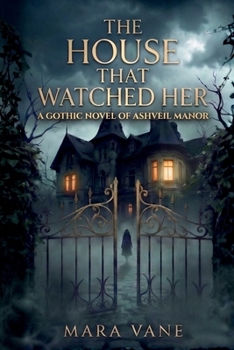
The House That Watched Her: A Small-Town Gothic Romance

She had not thrown it away.
The photograph of Ashveil Manor in morning light. The unopened letter from her cousin Helen, who came to Harrowgate in August and did not leave it alive. The decade-long thing with Marcus Vane that she has been telling herself, for fourteen months, is finished.
Delia Marsh has done the work. She is calmer. More considered. She has a therapist she trusts, a better flat in London, and a version of herself she genuinely believes in.
She has three reasons for returning to Harrowgate. She has them carefully filed in order. And she is good, the way she has always been good, at telling herself things.
What she finds in Harrowgate is not what she prepared for.
Marcus Vane is still in his cottage at the far end of the village. Still careful. Still attentive. Still a man who looks at her, across a pub table on a Tuesday morning, like a decade has not passed.
Anna is still at the bookshop with her cedar candle and her clear undefended eye. Mrs Pearce at The Larches asks no questions and gives Delia the same room her cousin Helen had stayed in, which is not, Delia understands, an accident. And Callum Ashford, who has buried four generations of the Vane family, watches her with the patient attention of a man who has spent thirty years learning to read what most people refuse to read.
Then another woman dies on the lane past Ashveil Manor.
The village begins, in its quiet way, to count.
The slow burn between Delia and Marcus is real. The warmth of Anna's bookshop, Agnes Thorp's particular silences, the rain on the pub windows: all of it is real. So is the long shadow of her cousin's grave at the back of the churchyard. So is the house at the end of the lane, the house her family has been afraid of for generations, that gives Delia nothing. Not warmth. Not refusal. Nothing at all.
The House That Watched Her is a literary gothic about returning to the place that knows you, the cousin you told not to come, and the dangerous question of what kind of woman you become when nobody is watching.
For readers of Sarah Waters, Susan Hill, Diane Setterfield, and Laura Purcell who want:
A literary gothic with a slow-burn romance threadA heroine in her thirties with a complicated history and a self-deceiving narrationA village that watches and remembersA second-chance romance built through stillness and rain and the things two people do not sayAn English countryside setting: mist, lamplight, churchyards, and centuries of quietA house that withholds rather than hauntsClosed-door intimacy and the patience of a slow readCan be read as a standalone. A novel in its own right, though readers of The House That Chose Her will find an extra layer of recognition from the first page.
If you have been looking for literary gothic with grown women at the centre, the Ashveil Manor trilogy is waiting.
Book One: The House That Chose Her: available now
Book Three: The House That Remembered Her: coming 6 June
Customer Reviews
ThriftBooks ® and the ThriftBooks ® logo are registered trademarks of Thrift Books Global, LLC
